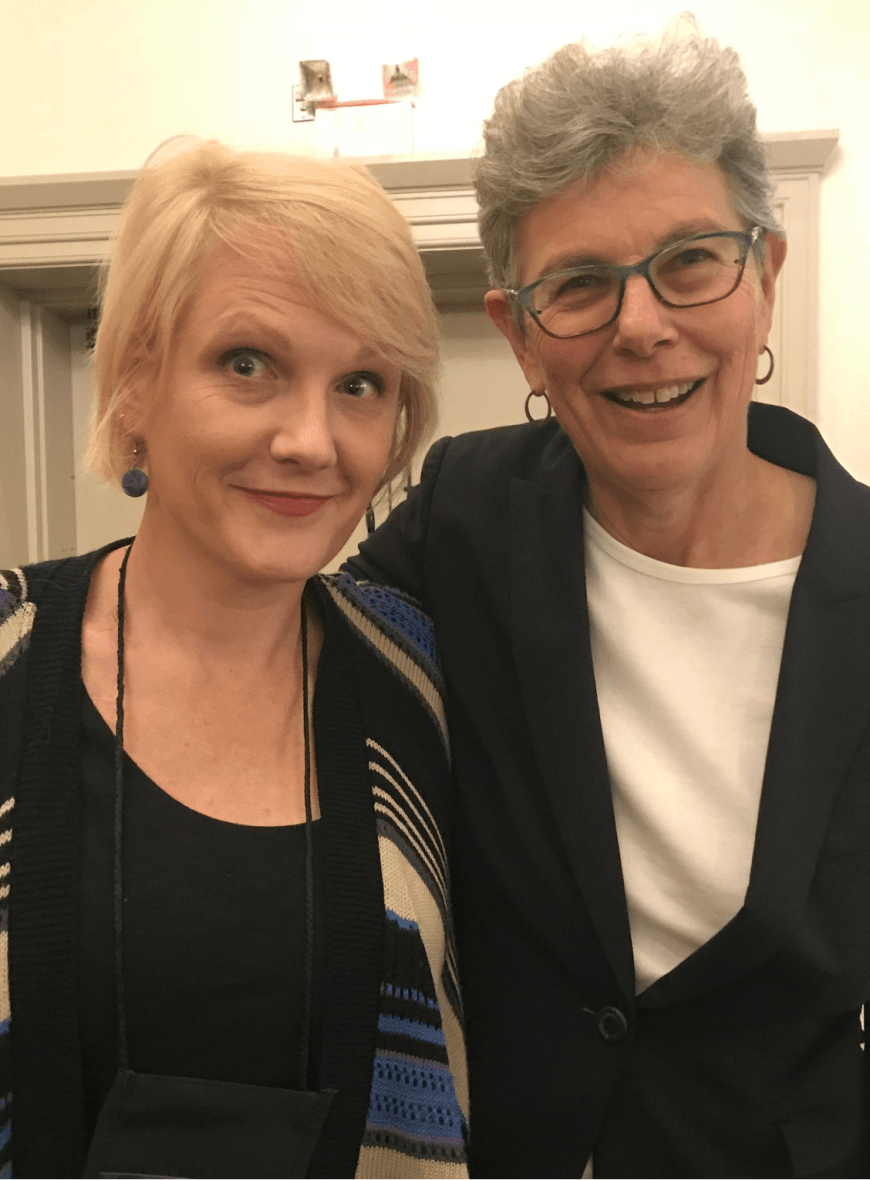
Moms on Monday #6 / Kathryne from LA

Good Morning and Happy Cyber Monday Fellow CVI Families and the People Who Love Us!

Today’s Mom on Monday is Kathryne from Louisiana, mom to “Little C.”   Kathryne manages Little C’s care while working and providing spot-on advice to many new mothers of children with complicated diagnoses on CVI Facebook pages.  She has also actively advocated on a local, state, and federal level to maintain Medicaid for children with pre-existing conditions and to improve educational outcomes for children with CVI.

Mom: Kathryne H. 

Child:  “Little C” / 21 months old 

Cause of CVI: Infantile Spasms, or, yet to be diagnosed genetic cause

Topic: Hospitalization and Regression

During the first 6 months after Little C’s diagnosis of Infantile Spasms, he was hospitalized at least 5 times before he was diagnosed with another rare neurological disorder called paroxysmal sympathetic hyperactivity. 

Hooked up to all those monitors, there is very little to do other than lay in bed, especially for a developmentally delayed child who cannot roll, sit, walk, etc. Any time we had an extended hospital stay we always ended up back at square one for therapies.  Rarely did we ever receive inpatient PT or OT, except for maybe 1 hour during the stay to show us what we should be doing (you know, if those cords and NoNos on the IVs did not make it impossible).  So, of course, there was regression after every hospital stay.  

After Little C’s CVI diagnosis, we purchased a set of light up LED pool toys.  The shapes change color, but can be set at 1 color which is perfect for CVI as kids move through the phases. 

They are called Floating Light Up GeoShapes – Color changing light for patio, pool, or home 4 pack.  https://www.amazon.com/dp/BOOKFMG12E/ref=cm_sw_r_cp_apa_6B5eAbPSZCGJV

During our first extended hospital stay we brought the sphere (dubbed the Ood ball by his Neurology team) to Little C’s hospital room.  

This was when I discovered that extended hospitalizations are the perfect time and place to exercise the brain for vision.   Most rooms are clean white and the scenery never changes.  The room is so dull and boring; it is perfect for our kids.  For the first time, Little C began to use his vision to look at something other than the ceiling.  The hospital even had Elmo, Big Bird, and Cookie Monster in the gift shop.  

We actually had a skill improve IN the hospital.  

So, naturally, what do you think happened during the next hospitalization?  We came prepared.  We purchased one of the lights that shines scenes on your house that is sold in stores at Halloween and Christmas.  You can find snowflakes, ghosts, or, in our case, just a blue kaleidoscopic image.    

When Little C was not storming, his room was an oasis with lullabies playing on the IPad and lights dancing on the ceiling.  And, of course, there was his Ood ball, Elmo, Big Bird, and Cookie Monster.

In spite of the hospitalizations, Little C has managed to improve from Phase I to Phase II. 

Unfortunately, I can’t say the same for his other skills. 

Thank you, Kathryne and Little C.   After a successful Thanksgiving, I wish you both better days ahead.  


Adventures in Advocacy / NE AER / Ellen Mazel / Standing Room Only, Part 1

standing room onlyThe Northeast AER Conference in Burlington, Vermont wrapped up Friday, November 17th.

Thursday, it was standing room only for Ellen Cadigan Mazel, M. Ed. CTVI. Ellen is the CVI Program Manager for the Perkins School for the Blind. (Her blog, CVI Teacher at wordpress.com is required reading for CVI parents, TVI and anyone who cares about a child with CVI.)

The information and discussions that arose from the presentations at NE AER should be another post topic.  I will do that one next.

For now, I will share briefly what I experienced and what I learned from discussions in and around the presentations.

First, it made my mom’s heart glad to see so much interest in CVI.  The fact that Ellen’s presentation was standing room only and Peg Palmer’s would have been if it had been in a smaller room was encouraging.

Many TVI, COMS, and administrators showed up to learn more about the condition that affects our children’s access to the world.

There were 6 presentations on Cortical Visual Impairment during the 3 day event.  Dr. Christine Roman-Lantzy was there!  I was present for an eye-opening discussion session. (Saved for Part 2) 

(I couldn’t stay for Matt Tietjen’s presentation on What’s the Complexity, but I really wanted to.  I highly recommend parents and teachers familiarize themselves with his work around complexity and literacy.  It is a perspective we all need to understand to help our children make progress visually and to understand what they are seeing. Check out the Perkins CVI Hub for the next class or webinar.)

This amount of information and discussion about CVI at an AER (the Association for the Education and Rehabilitation of the Blind and Visually Impaired) conference was unprecedented.

It would be great to see this kind of interest at every 2018 AER conference in every state or region of the United States and Canada.

Wouldn’t it? 

To share this opinion, you can find your state’s AER at http://www.aerbvi.org.

Find the president of your state’s AER and send her/him an email about your child, about CVI, and about the need for more teachers trained in understanding CVI.

You could ask them how we as parents can support our TVI in this training.  You could ask them what we need to do help make progress in getting CVI recognized as the #1 pediatric visual impairment in First World Countries. 

I mean, since it is.

Also, you can send the email to these folks too:

AER’s Executive Director, Lou Tutt, lou@aerbvi.org 

AER’s Chair of the Personnel Preparation Committee, Olga Overbury at olga.overbury@umontreal.ca

AER’s Chair of the (provisional?) Neurological Visual Impairment Committee, Susan Sullivan at ssullivan@aph.org 

Since I had given my presentation to essentially the same audience at Peg Palmer’s presentation the day before, I shared other parent stories from the previous post where I asked you what you would say to a room filled with TVI.

This is what I shared:

From Kathryne in LA:  “My theory on the lack of interest in addressing outcomes for CVI is that our kids have all been lumped as multiple disabilities.  Incompetence is assumed. That is not to say that blind children can’t have multiple disabilities, but CVI is more prevalent in the multiple disabilities class.  Since it’s more work other therapists and teachers ignore it. 

Addressing my son’s vision has given him more improvement in all areas.  More than any other therapy.  We are now starting to see improvements in other areas now that vision has improved.  

She asked me to point out that many of the other skills will follow if vision is improved.” 


From Anna in OH: Show care, compassion and patience.  If someone is asking for a CVI Endorsed provider, there is a reason.  

The good news about CVI is that we can do something about it.  Please accept the challenge to learn more about our children.  It will be worth it!

Please listen to the parents’ concerns and ideas.  Their children are their life, their whole world. Parents do know what they are talking about.

A passionate/trained/knowledgeable/driven CVI Endorsed provider is worth their weight in gold.” 

Then, I shared a couple of stories about the frustrations parents face when looking for appropriate educational services for our children.

One mom called her local university teacher preparation program for teachers of the visually impaired and asked if CVI was covered in the curriculum.  The head of the program told her no.  When she asked why, he said, We can’t be all things to all people.” 

One mom called her state’s School for the Blind when her son was identified as having Cortical Visual Impairment.  When she told them her child’s diagnosis, she was told, We don’t serve those kids here.  It’s too expensive to train our teachers in CVI.”  

If these 2 stories frustrate you, they should.  We have a lot of work to do to raise awareness and to raise our expectations of how our children are taught in their educational placements.

There will be more to come on this.

And, I wore this shirt. t-shirt


Brenda, the kickass mom from Seattle and the brains behind the blog and FB page, Start Seeing CVI,  made them and some proceeds of sales go the growing Pediatric Cortical Visual Impairment Society.

What a lovely holiday gift, if I do say so myself!   https://startseeingcvi.com/?s=T-shirt

More to come to wrap up NE AER.

Until then, Happy Thanksgiving!  I continue to be grateful for other parents who remind me that we in this together.

Because we are.


Seeking More Moms for More Mondays

Hello Fellow Mothers of Beautiful Children Who Happen to Have CVI,

We need more Moms on Mondays.

Okay, I do.  I need more Moms on Mondays.

I have thoroughly enjoyed hearing from all of the mothers who have contributed so far.  I learn something new every time a mother shares her story.

Thank you to Jessica, Mary, Subarna, Tiffany, and Lauren.  And, as always, thank you to Bernadette Jackel whose CVI mom experience can be found under The More Things Change widget on the CVI Momifesto home page.

I imagined Moms on Monday as a site a sleep deprived mom might find at 2 a.m. when she has finally gotten her child back to bed only to find that she is too tired and worried to get back to sleep herself.

Just over 10 years ago, when E was a baby, I felt more alone than I have ever felt in my life. The gradual realization of just how many challenges she would have to overcome pushed me farther and farther from “typical” conversations. I became less capable of small talk with friends or “cute kid” anecdotes shared over coffee with other moms.

(FYI New CVI Moms:  A lack of cute anecdotes, mind-numbing sleep deprivation, and an IV drip of caffeine for survival makes you less than desirable company at the weekly playgroup.  Also, your new deep purple undereye circles and recent lack of personal hygiene don’t scream “I’m available for small talk!”

Then again, maybe you are remembering to wear deodorant and to rinse conditioner out of your hair more often than I did.  If so, winning! )

If you haven’t lived it, it’s hard to explain the impossible combination of utter physical exhaustion and adrenalin fueled hypervigilance that thrives in mothers of children with special needs.

I personally found that early morning hours were the worst for this cruel phenomenon.  My whole body ached from being awake for too many hours, however, when I closed my eyes, my mind reviewed notes from the day’s therapy sessions or dissected an earlier conversation with the expert of the day.  Sometimes I’d remember that I had an older daughter and was supposed to bring snacks to preschool in 4 hours.  Good times.

Basically, my off switch was broken.

So, I’d get up and start looking up my questions online, or rummaging through my pantry for preschool snacks. (Water chestnuts and saltines, anyone? Anyone?) Those 2 a.m. research times can be very dark and lonely.

Finding stories from other mothers in the middle of the night when you feel as though you are the only person carrying the weight of your child’s world on your shoulders may be a source of comfort.

It’s equal opportunity comfort as well because it also works for middle of the day, afternoon, and evening worrying.

AND, I think we all know that if there was a marathon for hypervigilance and worry, a special needs mom would win it hands down.

We.  Never.  Close.

We never close, but our befuddled brains play mean jokes on us.  For me, after another  night of consoling, bouncing, and worrying, I’d drag myself into a closet.  Then, I’d realize the closet was not the shower.  So, for a moment, I would forget just why I was standing in the closet.  Then, I’d shuffle off to the shower.

I would stand, head bowed to focus the hot water on my aching neck. Staring absently at the tiles on the shower floor, the Barry Manilow song “I made it through the rain” began playing in my head.  Every. Single. Morning.

And, no offense, to 70’s soft rock, or Mr. Manilow, but I am NOT a fan.

It seemed less an anthem, and more of a mean spirited joke produced by my declining mind.

Sometimes I’d find myself wondering which was worse, the new routine of 4 hours of nonconsecutive sleep, or the promise of being serenaded by Barry Manilow in the morning.  (Again, it’s not YOU, Mr. Manilow.  It’s me.)

This is your brain on hypervigilance.

But, I digress.

Please consider joining us in creating a place where moms can find a story they may relate to, or, at least,  friendly company in the chaos.

A place where moms can find themselves “respected by the others whooooooo got rained on toooooo and made it throooooooough.”

Forgive me.  I’m not proud of that.  But, it was right there.  (See how annoying it is?)

I came up with some questions you can answer (see below), or do your own thing.  There is no right way to share your story.

Send it to info@cvimomifesto.com.

I will notify you before your story is posted to confirm your permission to share.

Moms on Mondays

Introduction: Your first name, your child’s first name and age, the state you live in
(If you would prefer to use an initial instead of your name, fine! If you’d like to share a picture, great!)
About your child: What does she like to do? What makes him laugh? What are her favorite activities? What do you like to do as family?

When did you first learn about CVI?

How were you given the diagnosis?

Does your child have other diagnoses you’d like to mention? 

How is/was your child’s Early Intervention experience with regard to CVI? (Were your providers knowledgeable? Were they open to learning?)

How is CVI being addressed in your child’s school setting? (If applicable)

What do you know now that you wish you had known at the beginning of your journey as your child’s mom?
What would you tell a mother whose child has just been identified as having CVI?

What would you like for people who have never heard of CVI to know?

Hopes and dreams? Anything else you’d like to add?


Thank you for your consideration.  Thank you for your company.

sorrows borne

Moms on Monday # 5 / Lauren from PA

Good Morning Fellow CVI Families and the TVI who love us (okay – put up with us),

This week’s Mom on Monday is Lauren, mother to 20-month-old Emma.

Lauren started a blog about her experience at Emma’s mother, Emma Bear’s Journey. Their unfolding story can be found at https://emmabear.org.

From the blog:

About me and Emma

I am a full time stay at home mom of an absolutely beautiful and amazing 13 month old girl named Emma.  She was born with hydrocephalus and later developed craniosynostosis during her first few months of life.  She’s been through more in her brief time here than most people will experience in a lifetime.  I admire her strength, resilience and fighting spirit.  This is her journey as well as mine.

Like a lot of children with CVI, Emma faces significant medical issues.  Their successes and challenges are very familiar to my experience as E’s mom.  She openly discusses many of the issues mothers of children with complicated medical diagnoses face – seizures, medical procedures, sleep deprivation, and the roller coaster of emotions that go along with all of this.

She has posted about a lot of CVI DIY projects that have helped Emma begin to use her vision.  The lighted tray and her method of simplifying board books are a couple of helpful strategies.

Lauren also moderates the closed Facebook group, Parents of Kids with Developmental Delays.  It is a great resource for parents to share and to ask questions.

Thank you Lauren and Emma!

Northeast AER 2017 / Adventures in Advocacy / Peg Palmer knows CVI

Good morning fellow families of well loved children who happen to have Cortical Visual Impairment,

I am writing from the Burlington Hilton where the 2017 Northeast AER conference is well under way.  I have heard that the attendance is roughly 300 TVI, COMS (Certified Orientation & Mobility Specialists), Low Vision Therapists, Occupational Therapists, Physical Therapists, with some program directors thrown in for good measure.

This is a great turnout.

Thanks to the efforts of Dr. Roman-Lantzy and people who lead the DeafBlind Projects in the Northeastern United States, this part of the country is well ahead of the curve on awareness of Cortical Visual Impairment.  There are TVI here who received training from Dr. Roman-Lantzy over 10 years ago and have been honing their skills and gaining knowledge ever since.

This conference has a CVI track – meaning there are presentations on various aspects of CVI in almost every time slot.   This may be almost unheard of at a conference like this.  It certainly is from my personal experience in which I show up at conferences and ask questions about CVI just to see what the response will be.  The response is usually a cold, hard stare from the presenter who is probably wondering who let a parent in.

It is refreshing and maddening at the same time.

Yesterday, Peg Palmer, a Perkins-Roman CVI Range Endorsed TVI with decades of experience, allowed me to hijack 15 minutes of her presentation about the CVI Range.

A shout out to Peg Palmer whose professionalism and compassion knows no bounds.  Connecticut is lucky to have her.  Her presentation on working through the CVI Range was very informative.  The videos of students she showed elicited a lively conversation and a lot of questions.

Exactly what we need.

I was able to talk to a room of 50 TVI and COMS (with a few therapists and a couple of program directors thrown in) to give them a parent’s perspective.  I shared some of my story as E’s mom and how challenging it has been to get CVI recognized, let alone understood in classrooms.

I asked them three things:

1.To believe in our children’s ability to learn

The presence of CVI is not an indicator of cognitive ability.  (Source:  The CVI page on the American Printing House for the Blind website)

I told them the Lego Tree story (see post on Lego Trees) and explained how easy it is for teachers, aides, and therapists to develop low expectations for our children if they do not understand the characteristics of CVI.  How many learning opportunities get lost if a teacher does not understand latency and lack of visual reach?  Too many.

2. To reach out to AER and to ask them make CVI a priority in professional development and in university teacher preparation programs

A few weeks ago, I had a meeting with the Executive Director of AER, Louis Tutt, and the Deputy Executive Director, Ginger Croce.  They very kindly answered my questions about AER’s slow recognition of Cortical Visual Impairment.  Only last year, did AER put together a provisional committee on Neurological Visual Impairment.  

Mr. Tutt told me AER responds to the concerns of its members.  So, if AER members contacted the president of their state chapter with the message that more professional development needs to happen for TVI and that future TVI needed to get more training on CVI, progress would be made.

Now we know.

Did you know that parents can join AER as a Associate Member for $98/year?  This is a non-voting membership category for anyone who is not employed in the field such as a parent or caregiver.

FYI:  Here are some email addresses you may find useful.

Executive Director, Louis Tutt – lou@aerbvi.org

Chair of the Neurological Visual Impairment Committee, Susan Sullivan, ssullivan@aph.org

Chair of the Personnel Preparation Committee, Olga Overbury, olga.overbury@umontreal.ca

You can find the president of your state AER chapter at aerbvi.org.

You could tell the powers-that-be at AER that you are the parent of a child with CVI and that you value their dedication to children with vision loss.

You could tell them that children with Cortical Visual Impairment, just like children with ocular vision loss, are not incidental learners (See how that came in handy?).

You could tell them that children with CVI require a different educational approach than children with ocular vision loss.

You could ask them to make educating children with CVI (the #1 Pediatric Visual Impairment in the United States and the Western world) a priority.  That means university teacher preparation programs need to add CVI to their curricula.  That means school systems need to provide extensive, ongoing professional development.

Understand this.  No one has all the answers.  This condition is complicated.  Each child is unique.

What we need to ask is that they join us in asking the right questions and seeking the answers.

3. To seek out more training

I told them about the Perkins-Roman CVI Range Endorsement.  I told them it wasn’t fair to ask them to do more training when that are understaffed and overworked.  I also said the training they got for children with ocular vision loss does not work with our kids.

So, to sweeten the deal, I offered pie.

Really, it’s all I’ve got. me-and-peg-e1510842788984.png


Northeast AER 2017/ A CVI Mom meets Vermont

Hello Fellow CVI Families,

Today, at 6:30 a.m., I boarded a plane from Dulles airport in D.C. to JFK, and then, boarded another plane to Burlington, Vermont to attend the Northeast AER conference.

AER is the Association for the Education and Rehabilitation of the Blind and Visually Impaired, the professional membership organization of administrators, teachers of the visually impaired, orientation and mobility specialists, and other vision professionals.

AER chapters around the country have annual conferences.

We CVI parents are often talking about how we need more teachers with expertise in the unique learning needs of children with CVI.

How will this be achieved if we don’t start making our voices and our children’s stories heard?

The kids are already in the classrooms.

Time is passing.

This urgency put me on a plane to where I knew I could reach out to some of the educators who will work with our kids.

Now, I’m staring at my computer screen wondering just what to say to TVI who are already overworked and understaffed.

I will keep you posted.

I can report so far that Vermont has

1. So. Much. Flannel. (a big selling point for me)

2. A restaurant called The Skinny Pancake.  I didn’t eat there, but, I may move in if my return trip doesn’t pan out..

because

I lost my driver’s license somewhere between D.C. and Vermont. (Expletive deleted times 10.)

If I don’t make it back, please forward all future correspondence to The Skinny Pancake at the Burlington Airport.  I will be the woman in the corner passed out in a blissful sugar coma behind a pile of syrupy dishes and covered in crumbs.  Wearing flannel.

I can think of worse ways to go.


Adventures in Advocacy: What would you say to a room filled with TVI?

Hello Fellow Parents of Adorable Children who happen to have a diagnosis of CVI,

If you found yourself standing up in front of 50 Teachers of the Visually Impaired, what would you want to tell them?

This week, I am going to Burlington, Vermont to the North Eastern AER conference.

AER (the Association for the Education and Rehabilitation of the Blind and Visually Impaired) is the professional membership organization for TVI and Orientation and Mobility Specialists.  AER offers approval to teacher preparation programs that meet AER standards.  There are AER chapters  in many states or regions across the U.S. and Canada.  AER conferences are where education professionals in the field of vision loss can get together to learn, to share and to network.

At the North Eastern AER conference, Ellen Mazel and Peggy Palmer are both presenting on different aspects of CVI.  They are very kindly allowing me to have 10 minutes to address their audience of educators.

I am going to Vermont because, as Ellen Mazel says, “Our kids can’t wait.”

But, we all know they are waiting.

I hope to ask the TVI about the number of children they see with CVI.  I am genuinely curious to hear what they have to say.

As experienced teachers, they know that kids with CVI are already in the classroom.
They have been for decades.
They can learn.
They need teachers who believe in their abilities.
They need teachers to have high expectations for them.

They need teachers who recognize the need to get more training to be able to bring the world to these children. The fact that these educators signed up for Ellen and Peggy’s presentations means that they are aware of the need for improvement.

And, the saying goes, “It never hurts to ask… TVI to take the classes to become CVI Endorsed.”

Okay, I added the last part.

At the risk of becoming the broken record all CVI parents become, CVI has been discussed and researched for decades.  CVI is the most common visual impairment in the Western world.

Yet, only last year did AER, the professional organization for educators for blind and low vision students, agree to form a provisional committee on Neurological Visual Impairment.

There is a disconnect here somewhere.  I think the disconnect is the lack of urgency for real progress in the education of children with CVI.

The national office of AER is in Washington D.C.  Since I live close to D.C., I recently made an appointment with the Executive Director, Lou Tutt.  I wanted to find out about AER’s stance on how to prepare their members to teach children with Cortical Visual Impairment. Mr. Tutt and Ginger Croce,  Deputy Executive Director, very kindly took the time to answer my questions.

What I took away from the meeting was the following:

  1. AER takes guidance from its members.  According to Mr. Tutt, if enough members demanded more information and training on CVI, then AER would comply.
  2. Reaching out to the head of the Neurological Visual Impairment committee would be a good way to continue the conversation.  I have not done this yet because I wanted to attend the conference first and get more information.

If there is a disconnect, maybe parents are the connection.  Maybe our urgency is what is needed to get CVI addressed by the organizations that create policy and teacher programs.

Let’s see what happens in Vermont.  I will get the chance to ask a group of members to strongly encourage AER to approve more training for teachers who will be teaching children with CVI.  I will suggest they get the Perkins-Roman CVI Range Endorsement.  I will offer them pie.

I will let you know how it goes.

And, remember, if you have something you would like to tell them, send it in to info@cvimomifesto.com.


Moms on Monday #4 / Tiffany from MO

Good Morning!

This week’s Mom on Monday is Tiffany.  She answered the questions posed by CVI Momifesto with her perspective as Wyatt’s mom and, also, offers words of advice.

Introduction:  Your first name, your child’s first name and age, the state you live in.

My name is Tiffany.   My son’s name is Wyatt.  He is 1 year old and we live in Missouri.

About your child:  What does she like to do?  What makes him laugh?  What are her favorite activities?  What do you like to do as family?

Wyatt likes to watch his sister dance around and be silly. He also likes to be tickled and play peek a boo. He will laugh any time we shake our head back and forth. I think it’s the movement since a part of CVI is movement.. He really liked to play with party bows when he was younger. Now he is more into playing with balloons and therapy balls.

When did you first learn about CVI?

We first learned of CVI after seeing the ophthalmologist when Wyatt was 3 months old.

How were you given the diagnosis?

By the ophthalmologist. After the eye exam, the nurse came in with a pamphlet for a near by blind school saying how amazing they were. As she handed it to me she had tears in her eyes.

Does your child have other diagnoses you’d like to mention?

He had a stroke at birth that resulted in significant brain injury and hydrocephalus. He has ataxic Cerebral Palsy, CVI, and dystonia.

How is/was your child’s Early Intervention experience with regard to CVI? (Were your providers knowledgeable? Were they open to learning?)

Sometimes I feel like I know more. I also feel like because they haven’t heard certain info that it isn’t as relevant because I’m telling it to them.

What do you know now that you wish you had known at the beginning of your journey as your child’s mom?

It’s hard! You will have to readjust your way of thinking, your goals, and how your child will develop on their own terms and time.

What would you tell a mother whose child has just been identified as having CVI?

Mention it to everyone. You will be surprised who can provide you with extra support and resources.

What would you like for people who have never heard of CVI to know?
Hopes and dreams?  Anything else you’d like to add?

Vision is a big part of learning. More people need to know about CVI so we can start earlier with proper goals and strategies. I wish there was more resources.

Thank you, Tiffany and Wyatt!  More people do need to know about CVI.  You are helping get the word out.

CVI Momifesto welcomes perspectives of parents of children of any age with CVI.  Every parent’s story is important.  Your willingness to share your experience can help other parents facing similar questions and challenges.

Send in your story, or answer the questions above and send them to info@cvimomifesto.com.

Adventures in Advocacy: Never Underestimate the Power of Pie

Hello fellow parents of glorious children who happen to have CVI,

Let’s talk a little advocacy with a dash of history, shall we?

When CVI Momifesto began in September, Dr. Sandra Newcomb, a Perkins-Roman Endorsed Consultant and Technical Assistance and Education Specialist at Connections Beyond Sight and Sound at the University of Maryland, left the following comment:

Historically, it has always been parents that brought about change.  Parents were behind IDEA (Individuals with Disabilities Education Act, a law that makes available a free appropriate public education to eligible children with disabilities throughout the nation and ensures special education and related services to those children) behind all the change in service delivery for autism, and the list goes on….

Not that you as parents need one more responsibility, but that is where the power is in special education.

Think about it.

In the not too distant past, children with special needs were not educated in schools.  They were not educated, period.  Parents were encouraged to “put away” their children and to continue with their lives.  “Throw away” is more like it if you look at the soul crushing history of institutions in America.

Parents went against the advice of medical experts and brought their children home.  Parents came together and began programs to teach their children.  Parents approached their legislators demanding that their children had the same right to a free and appropriate education as any other child.

We are the power that made special education happen. 

The fact that we have an IDEA to refer to and resources to look for (even if they are hard to find) is because of the parents who came before us.

Here’s what we, as parents of children with vision loss, need to understand as we blaze our trail.

Children with vision loss are considered a “low incidence” population. 

If you have had any experience trying to get a teacher with expertise in CVI in a public school district, you have learned that it is a challenge to get attention (and resources, funding, staffing…) for your child with this “low incidence” diagnosis.  You may find yourself in an IEP meeting or sitting across from a school administrator and hear those words “low incidence.”  Then, you may find yourself walking out of the meeting without getting anything you requested because “low incidence.”

Can I just say how much I dislike the term “low incidence”?

Some school systems and state legislatures have a tendency to forget that these populations of children need resources and funding too.

Here are a couple of thoughts I have about this.

#1.  There is no comprehensive, national system of data collection keeping track of children with CVI.  Some states have “soft” systems like a registry of children with certain medical diagnoses, but, doctors and hospitals are not required to use it.  Also, many state registries do not list Cortical Visual Impairment (or other pediatric visual impairments).

How can you keep track of a diagnosis if it is not even a box you can check off?

To school systems and state and federal funding streams, CVI is a low incidence population within a low incidence population.  Read: lowest possible priority.

But, if no one is counting, no one really knows the true number of children with Cortical Visual Impairment.  Often, children with CVI get put in a category called “multiple disabilities” and the vision loss goes unrecorded.

So, “low incidence,” my Aunt Fanny.  If you aren’t counting, then I call foul.

Remember, it is common knowledge that CVI is the #1 pediatric visual impairment in developed countries.

#2.   If children with vision loss are a low incidence population, then, to be heard, we, the parents, have to be loud, focused, and repetitive.  (Jessica M. said in her Moms on Monday post that she had become “a broken record.”  That’s what I feel like too.)

We need to start talking, often and loudly to certain groups of professionals.

We need to talk to teacher training programs to tell them we need more teachers who have been trained to work with children with CVI.

We need to talk to ophthalmologists to get CVI identified early and accurately.

We need to talk to legislators to change existing laws to require more specialized training (The Cogswell Macy Act needs your support!.)

We live in a world of constant distractions.  It is hard to get people galvanized around a single issue.

As you read this sentence, you have received 10 new posts on Facebook, 3 tweets, 15 emails, a few texts, your dog is pacing by the door in need of a walk, your child needs a new diaper, and your boss wants that report yesterday.  Am I wrong?

Every waking minute it seems as though we are bombarded with a parade of worthy causes and the resulting impulse to respond to them.

How can we start highlighting our worthy cause in today’s frantic world of modern media?

Here is something old school I’m doing every chance I get because something has GOT to give.

Talk to future teachers

From my experience, folks do not become special educators and/or teachers of the visually impaired to get rich quick.  They have a genuine desire to improve the lives of very vulnerable children.  They work hard.  There are not enough of them.  They may not have access to enough resources to do what they want to do in their classroom.

They care.

Wherever I live, I reach out to the special education department of the local university. In Bloomington, Indiana, I spoke to special education students in Dr. Melissa Keller’s class at Indiana University.  In Maryland, I spoke to students in Dr. Sandra Newcomb’s class.

Most recently, in Virginia, I reached out to Dr. Kim Avila, the head of the Visual Impairment Consortium, at George Mason University.  She has been kind enough to allow me to speak to her class of future teachers of the visually impaired for 2 years in a row.

On Monday, I joined a conference call to speak to this year’s group of future TVI on the first day of their unit on Cortical Visual Impairment.  The course is offered as online learning.  One of the students lives in Alaska and was compelled to become a TVI because of the number of children she is seeing in Early Intervention with CVI.  (She is my new hero.)

I told them about E, where she began and where she is now.  I told them about how challenging it has been to find teachers who had heard about Cortical Visual Impairment or what to do to help children with CVI learn.  I told them that teacher preparation programs for TVI do not typically include Cortical Visual Impairment in their curricula.

Then, I mentioned the Perkins-Roman CVI Range Endorsement.   I asked them to consider becoming endorsed because they will have children with CVI on their caseload and they need to be prepared for them.

Because, why not?  How is anything going to change if we do not start asking for things to change?  We have to start a conversation to raise awareness.  If these future teachers do not know that they will experience children with CVI in their classrooms, then they will not know to look for specialized training.

To seal the deal, I offered a homemade pie to anyone in the class who becomes CVI endorsed.

Even to the lovely lady in Alaska.

I would gladly freeze dry and Fed Ex a pie to Alaska, to the North Pole even, if it would increase the number of teachers who can help children with CVI have access to their environment.  So far, no one has taken me up on it.

But, the offer stands.

I do not kid about pie.

Future educators need to hear your experiences.  And, their professors would love to have your input in their classes.  You could research special education classes or TVI preparation classes at a university near you.  You could write a professor and say, “Hey, I’m the parent of a child with Cortical Visual Impairment.  I would love the chance to share our experiences with your class.”

If you do, tell CVI Momifesto how it went!

There might be a pie in it for you.


pie


Moms on Monday #3 / Subarna from VA

This week’s Mom on Monday is Subarna from Northern Virginia.  She shares some of the struggles and recent successes in finding the right placement for her son, Rohan, who, like so many children with CVI, has several issues affecting his ability to learn and to communicate.

Hi, I’m Subarna and my son Rohan is 10 years old. We live in Virginia, very close to his new friend, E.

Rohan got a diagnosis for CVI at age 3 years because of a persistent vision/preschool teacher who kept asking me to bring him to Dr. Christine Roman in Pittsburgh. He had already been through a serious illness at age 6 months resulting in continuous seizure activity (Infantile Spasms) which it seemed no treatment could stop for months. When we finally did find the right medication, the full extent of his developmental delays were presenting. It was determined he had global delays and Autism. We spent countless hours doing every type of therapy. He always would avert his gaze when reaching for things, but it was explained that it was a common behavior for children with ASD. Otherwise, he seemed to navigate around our familiar areas well enough, so I never suspected anything else.

After seeing Dr. Roman, who found Rohan’s case to be quite unusual that he truly had both CVI and ASD, we had quite a challenge convincing his school team that he needed vision support. One teacher told me:  you need to choose, either ABA (which absolutely works for him) or vision!?!  

We went through many years of this battle between his ABA folks not being able to understand the CVI. The TVIs as a whole didn’t always know much more than me about his level of CVI (which has always been between 6-7). I had a few great ones, and always found them to have the most expectations for him. His teachers felt that he was intellectually disabled and that was the reason he couldn’t learn at the pace of his peers.

As he fell further and further behind in the class, he started getting frustrated and had significant behaviors hurting himself. We tried a new school that was just as rigid as the public school setting, so he failed yet again. This past spring, when I tried to Home-school him and it was no better, I had pretty much given up all hope. We finally found a school that seemed to have the ability to listen and collaborate with others.  They have been able to accommodate for his vision. We are also working with an ABA group privately who learned much about CVI and are helping him use his vision more.

For the first time in his life, Rohan is making progress in all areas. He is happy and so are we!  He loves music more than anything, especially the Beatles. He also loves being read to, listening to his younger brothers, jumping on his trampoline, and eating everything in sight!  

It took me this long to believe that my son could do more than people said he could.  I’m glad we didn’t give up. You shouldn’t either!

Thank you, Subarna and Rohan!  It is a pleasure to learn that you have found a school placement and a team of providers that is working for you.  Thank you for sharing your experience and insight.