Adventures in Advocacy / VA AER 2018

Hello Fellow Families of Children with CVI,

Last Thursday, I had the opportunity to present to the annual conference of the Virginia Association for Education and Rehabilitation of the Blind and Visually Impaired.

At the Pediatric Cortical Visual Impairment Society conference in Omaha last summer, Dr. Sandy Newcomb and I did a presentation “CVI:  Stuck in Phase II” about non-verbal children.

We submitted a similar presentation for Virginia AER.

Then, Dr. Sandy and the ladies from the Maryland Deaf-Blind Project were invited to the Royal Institute for Deaf and Blind Children in Australia to teach their staff about Cortical Visual Impairment.

So, Australia won Dr. Sandy and Virginia AER got me and my parent’s perspective.

I told the lovely folks at AER that Dr. Sandy couldn’t make it due to a rogue koala attack and we carried on.  It was great to see Mark Richert and Rebecca Sheffield of the American Foundation for the Blind in the audience.   Which reminds me…

FYI and ACTION ITEM: AFB will be hosting a conference call for the CVI community titled Mobilizing Advocacy to Improve Special Education for Children with CVI on Wednesday, March 14th at 8:30 until 11:30 p.m.  

To join the call:  1-866-939-3921 / Code: 46438061)

cvi-stuck

Image:  A slide projected onto a screen.  The slide reads CVI: Stuck in Phase II / A Parent’s Perspective

So here’s  how I figure it –

If sharing my story about being Eliza’s mom and the challenges we face in getting CVI understood by — well, everyone, really…..

If my explanation of how hard it has been to find (or even create)  a Free and Appropriate Public Education…

If I can share our experiences in getting Eliza assessed on the CVI Range and talk about modifications that are working for us and modifications that haven’t worked…..

If ANY of this information gives the folks in the audience a better understanding of what CVI is and a dose of empathy for what CVI families go through on a daily, weekly, monthly, … basis,

Then, what we have gone through will help someone else.   I can live with this.

AND

If  I get the chance to spread important information about CVI to people who may not have heard it before, then so much the better. 

Information such as the following:

  • Cortical Visual Impairment is the #1 Pediatric Visual Impairment in First World Countries
  • The presence of CVI is not an indicator of cognitive ability.
  • The presence of CVI is not an indicator of cognitive ability.
  • Every child with Cortical Visual Impairment has unique learning needs.
  • CHILDREN WITH CVI (just like children with ocular vision loss) ARE NOT INCIDENTAL LEARNERS.
  • The accommodations necessary for children with CVI are DIFFERENT than accommodations for children with ocular vision loss.
  • They miss out on learning opportunities because they cannot make sense of the visual world around them.

Oh, yeah and –

The presence of CVI is not an indicator of cognitive ability.

When they get tired of hearing a mom’s perspective, I bring out the experts:

CVI Experts Weigh In

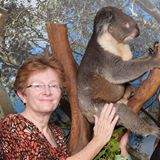
Dr. Sandra Newcomb (Before the unfortunate koala incident of 2018) :
sandy koala

Image:  A woman petting a koala bear sitting in a tree.

Presumption of limited cognitive skills and abilities leads to limiting visual access to information, specifically communication information (objects and pictures)

  • Becomes self fulfilling 
  • By limiting a child’s choice and control by limiting visual access to information, you inhibit 
    Communication
    Quality of Life
    Social connection
    Learning
    Participation in family and society

————————————————————————————————————

Ellen Cadigan Mazel, M.Ed. CTVI, CVI Advisor, Perkins School for the Blind:

Be a lifelong learner about the brain. 

Be a lifelong learner about CVI.

Ocular vision loss does not improve.

CVI CAN IMPROVE.

CVI masks cognitive ability.

If we expect improvement, we will get improvement.  

The minute we stop expecting improvement, we will not get improvement.

Va AER chair.png

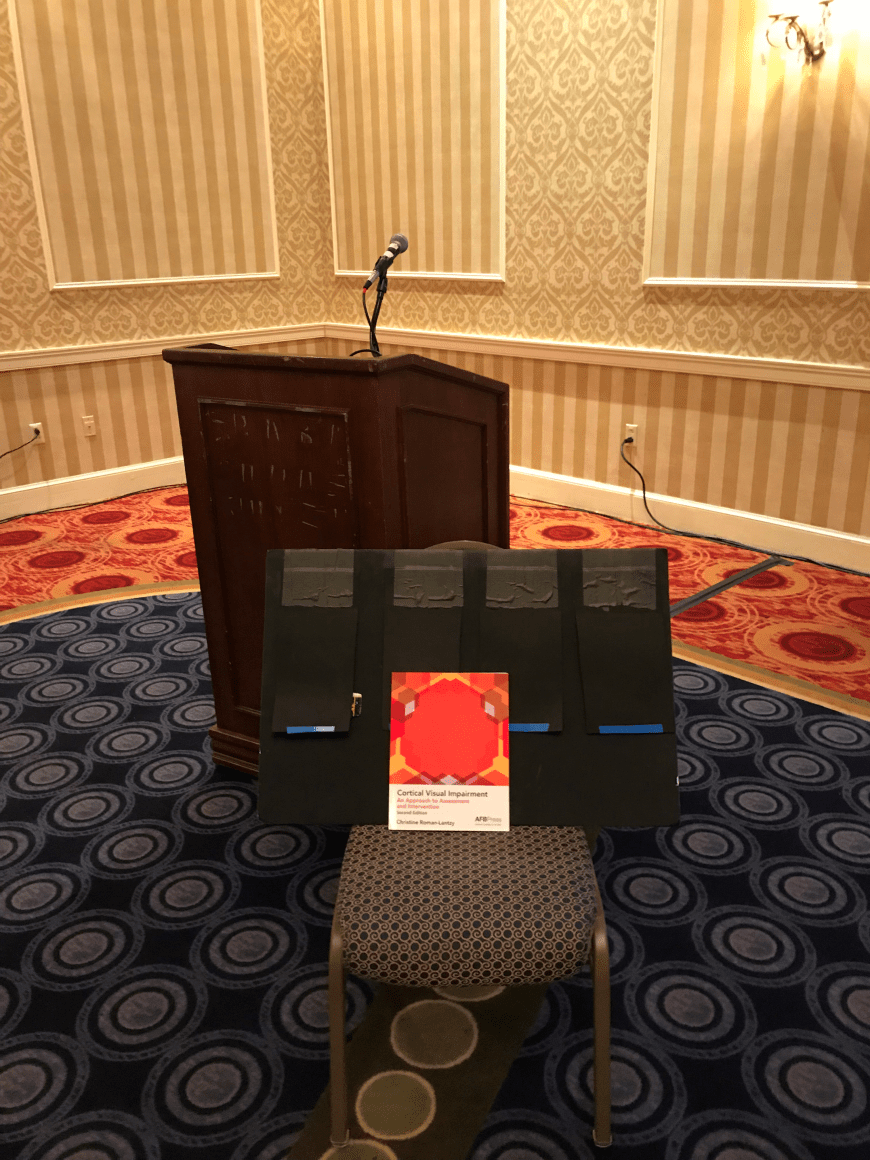
Image:  An empty podium.  A book and a large black posterboard is on a chair in front of the podium.

I showed off the new edition of Dr. Roman-Lantzy’s book, a picture calendar board I saw during Ellen Mazel’s presentation at NE AER and a Start Seeing CVI t-shirt.  Several TVI came up to me afterwards and asked about how to get a t-shirt.

During the presentation I suggested that the Perkins-Roman Endorsement class would be a great place to start learning more about how give a child with CVI visual access to her world.

I have very little to offer the overworked, underappreciated TVI I asked to get more training for our complicated kids.  I did, however, promise to make a pie for any future endorsee.

AND, this time, I even got Julie Durando from the Va Deaf-Blind Project to offer cake or other baked goods.  Apparently, she makes an Italian Wedding Cream Cake that will change your life and is about to begin experimenting with puff pastries.  Puff pastries, people!

I think we are on to something here, folks.

pie

Image:  A pumpkin pie with a slice missing.

Whatever it takes.


More Adventures in Advocacy to come!


Moms on Monday #14 / Jenny from IN

Good morning fellow families of wonderful children who happen to have CVI,

This morning’s Mom on Monday is Maya’s mom, Jenny, from Indiana.  Jenny and her family have been very active in advocating for early intervention services for children with vision loss.  In this post, Jenny takes on a common challenge to parents of children with CVI and ocular forms of visual impairment.  Take it away, Jenny!

maya

Image:  A girl in glasses gives a peace sign

I have two wonderful daughters, one of whom has CVI, Cortical Visual Impairment.  Maya is 7 years old now and in 2nd grade.  Her older sister, Zoey, is 8 and in 3rd grade.

Maya was born 2 weeks early on an overcast day in May.  Due to being rear ended in a car accident, I was in the ER, extremely pregnant, strapped to a back board, and wearing a C-collar.  I was watching the clock when the contractions started.  So began my journey in the world of having a “special needs child.”

Maya is a great kid who loves playing with her older sister.  Oh, there are times when she is extremely challenging, don’t get me wrong.  Right now her passion is butterflies.  Maya is as stubborn, determined, caring and sweet child who has never met a stranger.  At school she even has an amazing group of friends who look out for her.

I would like to talk about sleep.  Kiddos with a vision impairment can be, how can I put this?  Sleep challenged?  Let’s be honest, it can be a living nightmare for parents when their child can’t sleep.  It was for me.  She just wouldn’t sleep!  Maya was 2 years old at this point and climbing out of her crib when we first started talking about sleep.  I was looking particularly haggard at one Developmental Peds appointment when the doctor asked me if Maya was sleeping.  They recommended some melatonin and a sleep safe bed.  One insurance fight later, a big truck pulled out front with the miracle bed.  Let me tell you, it was worth every second of dealing with the insurance company.  The solution worked until Maya was 5 years old.  One day she discovered how to climb out of that thing.  This kid who walks like a drunken sailor can climb like a professional rock climber.  She would climb out of that bed, play in her room, and occasionally climb into bed with me, or go into her sister’s room and play.

Ok, I thought, I can deal with this.

Then, one night, she went outside.   I woke up to knocking on my bedroom window.

Good lord, it was Maya! Her knees were muddy where she had fallen, and her bare feet were cold.  She was bored playing by herself and wanted some company.  That was the worst night of my life.  My baby could have gotten seriously hurt and I was oblivious.  The thought never crossed my mind that she would go outside by herself!  I asked her why.  She said that she couldn’t sleep and decided to go play outside.  Oh, and she brought the family dog with her on her 2 a.m. outdoor adventure.  After that, my husband added alarms on Maya’s door, and every other door in the house that could lead to a potentially dangerous situation.  maya the great escape

Image:  A girl standing in a swing in the backyard

We changed tactics.  Instead of managing the situation, how do we make it better?  I googled, researched, and talked with my mom.  We tried everything from promising I-Pad time if she would stay in bed to taking away toys if she got out.  Nothing worked.  It felt like I was slowing losing my mind from not sleeping.  If she wasn’t sleeping, I wasn’t sleeping.  I needed to make sure she was safe.

Maya has trouble getting to sleep and staying asleep.  Finally, I talked to experts.  I called every doctor and specialist that I could think of who might help.  Doctors we hadn’t seen in years!  I was drowning and she was too.  Due to being persistent and sobbing over the phone to a sympathetic nurse we got an appointment  with the sleep clinic and the nearest Children’s Hospital.  (Of course, we had to get a referral sent over first.)

We implemented the advice that the sleep clinic recommended and it kind of worked, but not all the time.   She was falling asleep at school at this point.  She was acting out because she was tired and cranky.  That got us bumped up to the sleep psychologist.  With their help we finally got a handle on the situation when they added some sleep medication in addition to the melatonin.  It helps her sleep through the night and not get up at 4 a.m. every morning.  She doesn’t sleep well every night, but most nights.  It goes in cycles really.

Here is what we do.

No screen time 2 hours before bed.  She is sensitive to blue light.  It sends her brain the wrong signals.  Instead of the signals – “It’s time to relax” and produce melatonin, she would play on the IPad all night long.

The doctor added an iron supplement because was have a family history of restless leg syndrome.  The doctor thinks it’s genetic.  Apparently, it can skip a generation and then crop back up again.  Awesome!  It takes about 3 months to build up to the correct level of iron.  Maya tested low on her iron.  Hopefully, the supplement will help.  In some cases, once that iron level is up to where it needs to be the restless leg goes away.  (Fingers crossed!)

We also took out all of her toys and distractions from her room and added a strict bedtime and a bedtime routine.

If your child isn’t sleeping, you are not alone.  Don’t wait.  Talk with the experts and get some help.   It will benefit your whole family and your marriage.


Thank you Jenny and Maya!  I read your post with great interest because sleep is a constant challenge for us too.  Thanks for sharing!

“First they ignore you..”

“First they ignore you, then they laugh at you, then they fight you, then you win.”

— misattributed to Mahatma Ghandi according to Snopes (It doesn’t matter who said it. Heck, let’s go Spartacus and all claim it.) 

Yesterday, I reblogged a post from the CVI Teacher, Ellen Mazel.  She was responding to what seems to be a common – and, frankly, disappointing – misconception regarding the Perkins-Roman CVI Range Endorsement.

And, I couldn’t get it out of my head.  It really burned my beans so to speak.

We CVI families are in this together, so when you mess with one of us, you mess with the whole trailer park.  (My favorite bumper sticker from a visit to Florida some years ago.  You’re welcome.) 

The misconception is this.

Some administrators and educators in the field of the education of children with sensory loss believe that Perkins School for the Blind and Dr. Roman-Lantzy are making themselves rich off of the CVI Range Endorsement.

These folks are vocal and dismissive of the work being done to train providers and parents about how to help children with CVI build their abilities to visually access the world around them.

Ellen Mazel’s post lays out the administrative costs to offer the CVI Range endorsement as explained by Mary Zatta, the Director of Professional  Development at Perkins.

Looking at the numbers, it is easy to see that no person and no organization is becoming wealthy offering training about CVI.   They are serving a need that had gone unmet for decades.

If we are going to be talking about Perkins and Dr. Roman-Lantzy’s work, I’d like to get the facts straight:

Let’s be clear about who we are talking about here.

First, Perkins School for the Blind was established in 1829.  It is the oldest school for the blind in the United States.  It is a 501c3 organization committed to serving individuals who are blind and/or multiply impaired.

Their mission is to prepare children and young adults who are blind with the education, confidence and skills they need to realize their potential.

Perkins is a champion for children with blindness and other disabilities.  It has a long history and stellar reputation for service including the fact that Annie Sullivan – arguably one of the most dedicated and creative teachers ever – was educated there.


Second, Dr. Christine Roman-Lanzty has spent decades of her professional life studying CVI, and seeing thousands –

let’s say that again –

thousands –

of children identified with this brain based visual impairment.

Dr. Roman-Lantzy knew there was a desperate need for an approach to training providers and educators about CVI.

She took it upon herself to approach organizations in the blindness community to help her develop a training

or

to help her advocate for better training of TVI on the unique learning needs of children with CVI.

The organizations said no.

Then, she approached Perkins.

Perkins School for the Blind, under the leadership of President Dave Power, understood the need for serving children with CVI, a quickly growing (yet still under-recognized) population of children. (HOW is that still possible?)

Dr. Roman-Lantzy said, “Children with CVI can learn. They deserve to be educated. Their families deserve to be supported.    Perkins said YES.

Perkins and Dave Power welcomed children with CVI into the scope of their mission.  Mary Zatta worked with Dr. Roman-Lantzy on developing the endorsement so educators and therapists would have a reliable tool to use when working with children with CVI.  Perkins has since developed a wide variety of classes, webinars, and on-site programming around Cortical Visual Impairment  to further support children, families and educators.

From my perspective, when Perkins agreed to develop the Perkins-Roman Range Endorsement, they said “Yes, your daughter matters.”


I will be forever grateful to them for recognizing a need and for taking that first uncertain step.

I respectfully suggest to anyone who wants to dismiss the CVI Range Endorsement, do your homework.  Understand it.  Understand the process of teaching children with CVI.  

If and when you have another approach to teach our children, let me know.  I will be the first to read your research, to buy your book, and to engage in a spirited debate

Until then, what purpose does it serve you to be cynical about people who are legitimately trying to help children with CVI and their families? 

I am a mother. I do not have the luxury of cynicism. I have a finite amount of time to give my daughter the skills she needs to be as independent as possible. I am looking (I have spent the last decade searching) for what I can DO for my daughter.

Cynicism serves no one.

I have found a path within the work of Dr. Christine Roman-Lantzy. We have seen success on this path. Our daughter is learning to recognize pictures.  She is learning to sign.  She is learning to communicate and to understand concepts.

We have found hope on this path.  She will be able to communicate her wants and needs.  She will have enjoyable activities in her life and opportunities to socialize in a meaningful way because we are learning how to teach her about the world in a way she can understand.

Why would you deny my family this information, this reliable and valid method of assessment and education?  Why would you deny us hope?  

Many CVI parents will be happy to give you their anecdotal evidence about how their children’s vision (and consequently, their cognition and their behavior) have improved by working within the scope of Dr. Roman-Lantzy’s work.

We don’t have time to be cynical.  Cynicism kills hope.

Sometimes hope is all we have.

CVI is new territory for medical and educational professionals.  We need more research.  We need to raise awareness.  There is a newness to this movement that makes some doctors and teachers of the visually impaired uncomfortable.  It is uncomfortable.  We get it.  Parents of children with CVI live outside of our comfort zones all the time. We are learning all the time. Sometimes our efforts fall short of our expectations. We learn from them and try again. There is no other option for us.

But, for those who choose to stand on the sidelines criticizing and spreading misinformation about Perkins,  Dr. Roman-Lantzy, and exceptional teachers like Ellen Mazel, I ask you: What purpose does your criticism serve?  Who does it help?

Aren’t you supposed to be helping the children and their families?  How are you helping?

What a disappointment it is to not even try.

What a greater disappointment to disregard those who do.


Death by IEP / Assessments and Access

There are no tests of potential (different from achievement) that are free from inherent bias for individuals with CVI. The items are often based on content that is linked to visual learning and therefore, the scores will skew low

….and they certainly do.
Dr. Christine Roman-Lantzy

Cognitive assessment is typically based on how a child learns information including rate of learning, problem solving, and accuracy. For children with vision impairment, they have not had access to basic information.

How can you learn, let alone be judged on, information that either you cannot access or others have not given you access?

Dr. Sandra Newcomb

Hello fellow families of beautiful children with CVI,

Since it’s IEP season, I’ve been thinking about assessment tests recently.  As a parent of a child with special needs, I have watched my daughter go through a gauntlet of physical, developmental and cognitive testing from her earliest days.  It can be hard to watch.  It can be hard to hear the results.  Whatever the results, I want them to be accurate.

As the parent of child with CVI, I have learned that there is a lot to be aware of when someone says they want to assess your child.

When Eliza was about a year old, a new occupational therapist wanted to assess her.

We were still wrapping our minds around the diagnoses that had quickly followed our girl into the world:  microcephaly, cerebral palsy, global developmental delay, cortical visual impairment.  The learning curve was less a curve than a straight 90 degree angle to climb with no climbing gear,  and occasional boulders of unforeseen complications – seizures, asthma attacks, severe GI issues, little sleep – raining down at any given time.  We were trying to find our way.

This was soon after our Neuro-Ophthalmologist had told us there was nothing we could do about CVI. “Take her home, treat her like a blind child, come back and see me in a year.”

This was soon after I had ordered Dr. Roman-Lantzy’s book and sought her out for the first time.  I was just at the beginning of understanding what Cortical Visual Impairment was.  The message that Eliza’s vision could improve, however, was loud and clear.

Dr. Roman-Lantzy’s work offered me a glimpse of hope, especially because many of her 10 CVI characteristics explained Eliza’s puzzling behaviors for the first time..

Eliza was a light gazer.  She stared at light coming in through windows, lamps, or any strong light source.  She stared at fans.  She reluctantly used her peripheral vision and only if she had to. There was a long latency period between the time she would glance sideways at an object and then reach for it (usually with her head turned away from the object).  If you did not know to wait, you would miss her processing and getting organized enough to reach for something she had seen 15, 20, 30 seconds earlier.

She would not look into faces.  Her head often hung down, especially in new environments.  The novelty of new places was too much sensory input, and often, caused her to have screaming fits.   She was in Phase I.  I was still learning what that meant, but it was a place to start.  It was a foot hold in my 90 degree upward climb.

The new occupational therapist wanted to assess Eliza’s fine motor skills to establish a baseline to measure future progress.  Made sense to me.  I knew we had to get used to doing this.  We had to let the experts do their thing. Their keen eyes and knowledge would help me read my girl who was in many ways still a puzzle to me.  Their assessments would give us a fuller picture of Eliza and what she could do.  Or would they?

This is what I remember from the first assessment 10 years ago.

It was called the Hawaii Early Learning Profile.  I remember because the acronym for this assessment is HELP.  That was very comforting.  Boy, did I need HELP.  And, why Hawaii?    What did Hawaii know that the rest of the United States did not?  Maybe, there would be poi and hula dancing involved.  (Remember, I was not sleeping and it gets very busy in my head even when I’m well rested).  The HELP would help.

Standing in the OT’s office with one-year-old Eliza on my hip, I read over the developmental charts in the HELP.  I noticed that a lot of what was assessed required that the child had typical vision.   I mentioned this to the therapist.  She agreed that was an issue.  HELP, like most developmental assessments, did not account for vision loss.  But, she would write a note that Eliza had CVI.

I continued reading the chart of developmental milestones.

Looks at picture” – Nope.

“Plays with hands, feet” – Hasn’t found them yet, so no.

“Looks at place where ball falls down” – Uh Uh.

“Plays Peek-A-Boo”  – Well, doesn’t look at faces, so pass.

“Searches with eyes for sound” – Can we substitute stares at light bulbs?

“Places cylinder in similarly shaped hole” – Okay, I don’t even know where to begin with this one.  Just no.

“She is technically legally blind,” I told the OT.  “She doesn’t look at pictures.  She doesn’t look at faces. New sounds startle her. Do you have a different assessment?”  

The OT assured me she would mention Eliza’s diagnosis of CVI in the notes section of the test.

“Wait, what?  The central challenge to her ability to interact with the world will be a footnote?” (Okay, I didn’t say anything that articulate.  The “Wait, what?” is more like it.) 

To begin, she wanted to test Eliza’s ability to track a ball and to reach for it.  She put a light colored tennis ball on a school desk and rolled it to where I was standing with Eliza in my arms.

“Get the ball, Eliza!”  the therapist prompted.  The ball rolled off the desk.  Eliza was oblivious.    The OT looked apologetic, picked up the ball and tried it again.  Eliza stared at the fluorescent lights above us.  I stared at the therapist in disbelief.

She can’t see the ball,” I told the OT.  “It is too similar to the color of the desk.  Can I put a piece of black cloth on the desk to make it easier for her to see?”

“No. We have to maintain the protocol of the assessment.”

“If she could see it, she might reach for it.” 

“We can’t change how we do the assessment.”

So, the assessment will just be a series of zeroes then. It is going to look like she can’t do any of this if we don’t give her a chance to see what you expect her to do.  You’re not going to get an accurate idea of what she can do right now this way.  That’s like me asking you to run an obstacle course or do an algebra test in the dark. How would you score on that?”

“I’m sorry.  This is how we perform this assessment.”

“Well, it’s basically useless.  So, I think we are done here.” 

After watching the OT roll a ball my daughter could not see to her and then, scoring her as unable to track and complete the task, it dawned on me that the rules of this test were stacked against her.  Her development was going to chart a different path, a path this test did not accurately measure.

This was a new and strange idea.  I was slowly getting used to the fact that Eliza didn’t fit in anyone else’s boxes – not the pediatrician’s typical development questionnaires, not the stupid head circumference charts, and now, not even in the assessment for a child with developmental delays.

We were in unchartered territory.  We needed people who would think (and assess) outside of the box.  If the test did not apply to her, then the rules didn’t either.   I thanked the OT for her time, told her we would not be working with her, and took Eliza home.

I am not an expert in developmental assessments, but I have sat through many of them over the years both as an observer and an interviewee.  Eliza is far too capable and far too challenging to be relegated to “notes in the margin.”

I have since seen gifted  interventionists and therapists work with Eliza’s sensory challenges – starting with a thorough reading of her scores on the CVI Range.  I have seen them observe her intently for long periods of time.  I have seen them use trial and error when necessary, but always respectfully.

The kid faces enough challenges as it is.  She at least deserves to be evaluated in a way that reflects her true ability and potential.

And, the HELP was no help at all.  (Sorry.  It was right there.  Someone HAD to say it.) 


Fast forward about 10 years to a week ago, when I was sitting in a meeting with our IEP team at Eliza’s school.

Our search for FAPE in our CVI saga is a long and complicated tale. There have been successes and setbacks.  In the CVI spectrum, Eliza is on the complicated side.  She is non-verbal and has had a series of lackluster school placements.

Yes, she has delays in her physical and cognitive development.  Yes, she can learn.  Yes, these two sentences can co-exist.  You would be surprised how many people you have to convince of this basic fact.

This year we have had slow, steady success with communication.  On the other hand, she has also developed some behaviors that get her out of doing things she doesn’t want to do.  (That kind of cleverness doesn’t show up on cognitive tests.  And, will give me more grey hair than I already have.)

In this recent IEP meeting, a school psychologist confidently presented her assessment of Eliza’s behaviors and introduced the Behavior Intervention Plan that would shape them right up.  There would be a token system of bright yellow stars that Eliza would learn to associate with immediate rewards.  Eliza will comply!  Eliza will be rewarded!

Eliza is currently in mid to upper Phase II now.  With private consultation and work at home, she has begun showing more visual curiosity.  We have worked on teaching actual objects in her environment first and then moving to 2D representations of these objects.  Recent research from CTVI Matt Tietjen has revealed that children with CVI struggle the most with symbolic representations of objects – cartoon drawings, illustrations, etc…   They need to learn the actual objects and then learn the pictures of the objects.  (Check out his class, “What’s the Complexity Framework” offered through Perkins elearning.  Seriously.)

This is what was going through my mind when the psychologist started explaining her token system to us.  They were proposing stars (symbols)  to represent a reward for a child who does not have a lot of external motivators. (I never said she was easy.)  I wondered if the psychologist had actually met my girl.

I wanted to clarify about needing to use actual objects and then move to 2D pictures.

I interjected, “You realize she has a visual impairment right?  She has Cortical Visual Impairment, so we have to —” 

I know, I know.  High contrast.  We have to make the stars high contrast.”  The psychologist cut me off mid-sentence and began explaining her token system again.

I was reminded of something CVI Teacher Ellen Mazel said at a recent conference.

Ellen says that the most dangerous people she has ever met are

1. Teachers who have never heard about CVI

and

2. Teachers who have been to one workshop or read one article and think they are experts in CVI.

I knew I was sitting in this IEP meeting with someone who had read an article and decided she knew CVI.

She was going to continue using the assessments and the strategies she knew (for children with – I can only assume – typical vision) without taking into account how Eliza has access to her environment.
By the way, not having access to your environment, not understanding what is going on around you will affect your behavior.

This situation is still a work in progress.

I am shopping for an advocate and hoping to win the lottery.  To be continued….


What have I learned from these experiences?  What do I continue to learn?

When dealing with children identified with CVI, the CVI Range (Roman 2007) is the assessment that is the foundation of all other assessments.

When you are the parent of a child with CVI, be wary of the assessments used by your intervention or educational teams.  There are not many developmental assessments that take visual impairment into account.  Ask a lot of questions.

Ask them if they know what incidental learning is.  Our children are NOT incidental learners.  This fact should guide how therapists and teachers interact with them.

If you don’t feel comfortable with the answers, ask more questions until you do.  Or, ask for new providers.  You have every right to work with therapists and interventionists who have your child’s best interest at heart and who understand how to work with a child  with CVI.

Regarding other assessments for young children with sensory loss, I found interesting information here:

Development Charts for Blind and Visually Impaired Babies and Children

and

http://www.perkinselearning.org/scout/assessment-young-children-visual-impairments

I am also aware of The Oregon Project for Preschool Children who are Blind or Visually Impaired. It is a comprehensive assessment and curriculum designed for use with children birth to six who are blind or visually impaired. It can be used by parents, teachers, vision specialists, or counselors in the home or in the classroom setting.


I am not recommending one assessment over another.  Each child with CVI is unique and requires a multi-disciplinary team approach of therapists, interventionists, teachers, and doctors.  Some of these team members must have a thorough understanding of CVI.

We, the parents, are team captains.  If your team proposes to assess your child with developmental tests that do not give your child access, you may need to discuss what other methods of assessments are available.

If no one on your team says you need to get a CVI Range completed for your child by a Perkins-Roman Endorsee, then, you need to lead the way.

Inaccurate results are not going to help your child.  Inaccurate results are not going to help your child’s therapists or educational team.

Even when it comes to assessments:

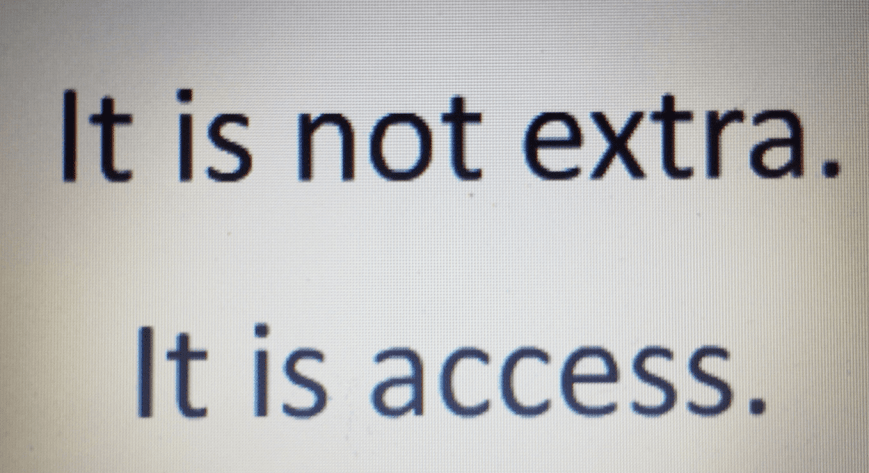
It is not extra

And, to all of those folks who want to test our children with tests that do not accommodate them…

To all of the therapists and teachers who have read one article or attended one workshop on CVI and then try to fit these kids in the margins or the footnotes, Eliza and I would like to respectfully say,

206827_1028122715195_352506_n


Moms on Monday / Storytelling is dangerous

“Storytelling is dangerous to those who profit from the way things are because it has the power to show that the way things are is not permanent.  Not universal and sometimes, not even necessary.” 

-Ursula Le Guin


Hello fellow families of delightful children who happen to be identified with Cortical Visual Impairment,

There are several mothers out there who have let me know that they are working on a post for Moms on Monday.  Ladies, I thank you. I’m a mom and it’s Monday, so I’m going to invite you once again to share a part of your and your child’s story with us. When you have the time, of course.

As we all know, and as Dr. Roman-Lantzy frequently says, CVI Moms are the busiest people we know.

We are the busiest people she knows because we are working tirelessly to get our children acknowledged and accommodated in a system that is not built to acknowledge or accommodate them.

The way things are is exhausting and discouraging.  

I hope to gather as many stories as possible as a resource of personal experiences for families. Every story is important.  Please know that there are no wrong answers.  You can write something original, or you can use the questions in the Calling All CVI Moms post as a starting point.  You can help another parent just by allowing your voice to be heard and allowing your child to be seen.


There is another reason for collecting stories.

As the writer Ursula Le Guin reminds us, the way things are is not permanent.

Not universal and not even necessary.

Let that percolate for a minute.

The way things are is not permanent

Not. Universal.

And 

Not. Even. Necessary. (This is my favorite part.)

We have a unique ability to assess the shortcomings of the systems we are fighting. (Did you ever think you’d be an expert on neurology, ophthalmology, neuroscience, & methods of teaching children with sensory loss?  Me neither.) 

From our shared experiences, we have the ability to imagine a better way and to work towards a Way things are” that recognizes and provides for children with CVI.  

Our stories will become a spotlight on inefficient, outdated methods of data collection and a tone deaf educational system. Our children matter. They need to be counted. They need to be taught, actually taught. (ACCESS! They must have access! They are not incidental learners! Sorry, I just had to get that out.)

As CVI families begin to advocate, they will find themselves in the offices of their elected officials and speaking in front of school boards. When CVI families begin to advocate, they may feel as though they are fighting an uphill battle (yep) and that they are alone (NOPE)

The methods of keeping track of our children on local, state, and even the federal level are woefully inadequate.  States vary in their expectation of counting children with special needs, and CVI does not even make it on the list of many states.  It is still called “Cortical Blindness” in many places.  We need to change that.

If the children are not identified, and not accounted for, then the funding necessary to provide resources will not be included in your state budget or the federal budget.

There are plenty of state legislators who will not want to give you the time of day because you and your story represent more expenses in your state’s government.  That is just too bad because it’s your budget too.  You live in and pay taxes in your state.  Heck, you vote!  (Please vote.)   Your friendly neighborhood legislator needs to meet with you, a friendly neighborhood constituent.

Here’s an example of the power of storytelling.

When we moved to Indiana, Eliza was 2 years old.  She had one more year of early intervention.  She was globally delayed.  We qualified for several therapies, occupational, physical, speech and developmental therapy.  I was so grateful to have access to these services.  I knew, however, that her lack of usable vision was going to affect how useful all the other therapies were, so I asked about early intervention for vision loss.

I was directed to the Indiana First Steps matrix – the database for all of the providers in the state.  When I entered “visual impairment,”  the name of an Optometry professor at Indiana University came up.

One name.

For the entire state.

And, the description mentioned making an appointment to come to his office to have your child assessed for glasses.  Not home visits.  Not early intervention.

What about the children who were blind?  Or, who, like Eliza, were legally blind due to Cortical Visual Impairment and who needed to be taught to see?

I asked around and was referred to the Indiana State School for the Blind and Visually Impaired.  I was able to set up an appointment with the Outreach TVI who came to my house to meet Eliza and me a few weeks later.  She was the most wonderful and experienced TVI.  She knew about CVI.  She understood the lack of access and calmed my fears.  She gave me several articles and showed me some ways to interact with Eliza that had not occurred to me.  She stayed for over 2 hours.

My prayers were answered.

I asked to schedule our next appointment.

And, I discovered that this wonderful TVI had a caseload of over 300 children.

One teacher was the entire early intervention team for infants and toddlers who were blind or had severe vision loss.  She drove around the state staying as long as she could, providing everything she could in the very limited time and with the very limited resources available to her.  She knew it was not nearly enough.  What she provided was what the system would allow.

It was just how things were.

By the time she could see Eliza again, Eliza would have aged out of early intervention.

How was that okay?

To make a long story a tad shorter, I eventually found myself testifying before committees at the Indiana Statehouse about the lack of early intervention for infants and toddlers with vision loss.  I poured my heart out about how hard it had been to have a baby I could not reach while some committee members chatted or got up and left. (Not all. Some were very receptive.)  I had meetings with state representatives who did not crack a smile the entire time I sat across from them.   It was easy to walk away from these experiences and think that nothing would change.

I also had meetings with state representatives to vowed to work with me and did.

statehouse

Image:  Three women seated around a table.  Annie Hughes and Rebecca Davis meeting with policy staff at Indiana Statehouse.

Over time and with the help of Indiana State Senator Mark Stoops, and his brilliant policy director, LeNee Carroll, Indiana made changes to its Birth Defects Registry (worst. name. ever.).  We got CVI and visual impairments added.  We were able to advocate for and to build a system of early intervention services specifically for children with vision loss.

We (that wonderful TVI, Annie Hughes, an agency called Visually Impaired Preschool Services, and a group of kickass families) changed the way things were.  

It can be done.

After your interaction with the cranky legislator who does not want to fund more services for children with special needs, you can tell Rep. Cranky to go to CVI Momifesto to meet more parents of children with CVI and to learn more about what they have gone through.  The stories here can provide back up.

There is more back up on the way.  2018 will indeed be a turning point in the awareness of CVI.  Many CVI moms are working to make sure of this.

You have the power to change the way things are.

gals

Image:  Three women standing with arms linked.  Meredith Howell (CVI Mom) and Annie Hughes from VIPS Indiana, and Rebecca Davis


Death by IEP / A New Category (Not a previously unpublished Agatha Christie novel…although wouldn’t THAT be cool? …but I digress.)

Hello fellow families of glorious children who happen to have Cortical Visual Impairment,

It’s IEP season at our house! 

That festive time of year parents of students with special needs eagerly anticipate with the kind of glee small children save for Santa.

Deck the halls with articles about neuroplasticity and webinars on Orientation and Mobility….Fa La La La and the CVI Range….. Ho Ho, ah phooey.

I can’t fool you.  I am not jolly.

Technically, it’s always IEP season at our house because I continue learning what I have to ask for and how to advocate for my complicated girl with a brain based vision impairment not currently acknowledged by the vast majority of school systems in the U.S.  More importantly, it is not acknowledged by, or regulated in, the current laws of Special Education.

Ho Ho – Holy Crud, this is hard. 

(To get us all on the same page, here’s a very basic definition of an IEP.

“IEP stands for Individualized Education Program.  An IEP is a written statement for a child with a disability  that is developed, reviewed, and revised in a meeting in keeping with certain requirements of law and regulations.

The IEP has two general purposes:

(1) to establish measurable annual goals for the child;

(2) to state the special education and related services and supplementary aids and services that the public agency will provide to, or on behalf of, the child.

When constructing an appropriate educational program for a child with disability, the IEP team broadly considers the child’s involvement and participation in three main areas of school life:

  • the general education curriculum
  • extracurricular activities
  • nonacademic activities”)
Source:  http://www.parentcenterhub.org

By the way, we parents are a critical part of the IEP team.

Don’t let anyone tell you otherwise.  Especially when it comes to CVI.  We have a long, bumpy road ahead of us, but we are the ones getting educated about CVI.  We are the ones seeking out experts, reading journals and books.

(Speaking of BOOKS, Dr. Roman-Lantzy’s NEW book, Cortical Visual Impairment: An Approach to Assessment and Intervention, 2nd Edition is out!!!!

Go to the AFB Store to check it out! 

https://www.afb.org/store/Pages/ShoppingCart/HomePage.aspx 

Then Celebrate!!)

We moms and dads are critical members of our children’s IEP teams.  We stay up late researching articles on CVI and our children’s other needs and diagnoses.  We print them out the night before.  We highlight and staple the articles filing them in manila folders with our children’s names written neatly on the tab.  This is our attempt to have some control over a situation in which we have nearly no control whatsoever. (Or maybe it’s just me.)

IMG_1947.JPG

Image:  A haggard woman in sunglasses holding stacks of research in each hand prior to an IEP meeting.

I am a perpetual optimist, much to the annoyance of my husband and some of my friends. Yet, despite my tendency to be ridiculously optimistic in the face of dire circumstances, I am worn down by years of IEP meetings that seem to go nowhere.


I have not learned the skill of successful IEP planning.  I am embarrassed to admit this. My daughter is now 11-years-old and I still feel inept and ineffective.  I feel as though I should be smarter than this.  

Googling “IEP assistance” brings up  many, many resources for IEP writing and advocacy.  I suppose I am in good, if frustrated, company.


In spite of plenty of effort and research, I  haven’t been particularly successful in articulating how Eliza needs to learn and how the school needs to put it in place. I’m worn down by giving each new school and each new teacher the benefit of the doubt for a few months,  then discovering that the implementation of what we put in the IEP was not carried out.  I’m worn down by insisting that she can learn more than the school thinks she can (“The downward spiral of low expectations.”).  I am worn down by seeing stacks of articles I printed out, untouched on someone’s desk.  Or, never seeing them again.

iep-hell.png

Image:  A dining room table covered in papers, low tech communication devices, pictures and binders in preparation for an IEP meeting

Every year I spend  hour after hour attempting to convince, cajole,  and then, demand that the school team learn about how CVI is an obstacle to my child’s ability to learn and WHAT TO DO ABOUT IT.  I have hired private consultants and therapists with money I do not have.  I have documented the progress we make at home to take to school to show what Eliza can accomplish with mutual goals, high expectations, and a common understanding of how to navigate Cortical Visual Impairment because it is an issue every waking second of her day – much like my typical vision is with me every waking second of my day.

Meetings are planned.  School staffs are polite and weary.  Meetings end.  Everyone needs to get back to their jobs.   We agree to disagree.  I refuse to sign the document, or sign in partial agreement with my handwritten list of concerns.

The NEXT IEP meeting is scheduled in a couple of weeks so we can all jump back into the ring and continue the match.

And, before I know it, another year has passed.  I have been humored and circumvented without even realizing it.

I drag myself home after another IEP  meeting to nowhere like the last contestant in a 24 hour dance marathon.  I’ll crawl into a quiet place to sit and stare vacantly for awhile.  (Sometimes I find myself mumbling, “The horror, the horror…”  Ok, that was a slight exaggeration.  Maybe, “the frustration, the lack of understanding…access…..it’s about access, dang it”  Yes, that’s more like it.)

One night as my husband was coolly observing what used to be the dining table (see above), but is now my Command Center For Changing Education As We Know It For Children with CVI  – (too much?) – he commented,

“It’s like Death by IEP.”

And, suddenly my world made a little more sense.

So, now CVI Momifesto has a new category for all of the fun, D-I-Y projects that are our children’s IEPs.   This category will be a place to tell the IEP stories and to share what works and what really doesn’t work.

Baloney

Image:  A post-it note with the words “This is baloney” written on it.  The post-it note is on a copy of an IEP.

To be continued…..


Moms on Monday #13 / Rachel from MD

Good morning fellow families of lovable kiddos who happen to have Cortical Visual Impairment!

This morning’s Mom on Monday is Rachel from Maryland.  Rachel’s son, Henry, was identified fairly recently as having the characteristics of CVI.  Rachel hit the ground running educating herself and advocating for her son and our children at the National Institutes of Health.  (See a photo that will make your day below!)

Right now, I am the closest I’ve ever been to truly knowing my son.

My sweet, joyful, funny Henry who is always ready for a hug, a dance party, or a bus ride, but so often is frustrated to the point of tears by the mundane challenges that other 5 years olds negotiate so effortlessly.

Since he was born, we have puzzled over Henry’s vision problems, coupled with developmental delays and behavioral outbursts. Then, only 8 months ago, for the first time, a therapist suggested he had the characteristics of CVI. This moment changed everything.

Rachel and Henry

Rachel and Henry schooling the medical community about the characteristics of CVI at the National Institutes of Health.  How cool is this picture?  

Henry’s vision was always a mystery—at least that’s what every doctor told me.

We saw a pediatric ophthalmologist, neurologist, neuro-ophthalmologist at Children’s National in DC, pediatric genetic ophthalmologist at the National Institute for Health, and no one ever mentioned CVI. This included a series of vision teachers that had worked with Henry since he was 1. So of course, I took the wait-and-see approach. If these doctors and teachers aren’t sure, then Henry’s vision must be a mystery. (Yep, that’s me screaming right now. The daily anger has not yet subsided.)

Our appointments were dominated with conversation about Henry’s ocular issues: his nystagmus and pale, small(ish) optic nerves. Henry also has hypotonia (low muscle tone), vestibular processing issues, and global developmental delays (high fives to all you CVI parents who spend the evenings and weekends at therapy appointments!).

We spent Henry’s first two years of life trying to get him to eat enough. He was in the zero percentile for weight for way too long. By now, he eats nonstop, and we are grateful to be out of survival mode. Like we all have heard, our kids are unique cases, complicated, with a lot of things going on.

But this still doesn’t justify why CVI was not on our radar sooner (I still kick myself for not figuring out on my own that he has CVI).

So back to this moment that changed everything. Henry was in a Pre-K program for students with special education services. His teacher kept asking me about his vision and I kept going back to Henry’s primary ophthalmologist, who told me that his vision was fine (yes, his acuity was in the normal range) and that Henry has attention and behavioral issues that need to be addressed. I naively told Henry’s teacher this and I am forever grateful that she did not listen to me. She got a specialist from the vision office to observe Henry who then recommended him for the Vision Pre-K class.

At Henry’s IEP meeting 8 months ago, one of the vision teachers at the table said, “You know, Henry has characteristic behaviors of CVI.”

I sat there, mouth open, frozen with confusion, and muttered, “What is CVI?” I later learned that this TVI attended a CVI training with Dr. Sandra Newcomb, one of the leading experts on CVI who also recently completed Henry’s CVI Range Assessment—Henry’s in Phase 2 (Roman-Lantzy).

From what I hear from CVI parents across the country, a TVI knowledgeable about CVI is the exception. It is unacceptable that our kids do not have access to trained vision teachers who can provide interventions.

We know that our kids can learn to see with the appropriate interventions (Roman-Lantzy), so why, WHY, do universities refuse to include coursework on CVI?

A side note on Henry’s current Vision Pre-K class. Henry’s teacher is a TVI knowledgeable about CVI. The physical environment is CVI friendly and all tasks are modified for Henry’s CVI. There are 8 students in the class with a range of vision issues, half of which have CVI. The school’s OT, PT, and Speech therapists adapt their work based on Henry’s CVI needs. Even the PE teacher develops activities adapted for the blind and visually impaired. I know, is this for real? It is. Henry’s placement is an anomaly in this country. Every child with CVI deserves this opportunity. Unfortunately, this vision program stops at Pre-K and because Henry is low-incidence (I. Hate. This. Term), he has fewer options available for Kindergarten. So I join the ranks of fierce parent advocates to ensure my son’s needs are met and that he has access to all aspects of the learning environment.

It’s been a whirlwind trying to learn as much as I can about CVI, while processing the range of emotions that come with this new diagnosis—gratitude, anger, relief, frustration, excitement, WHY MY SON?!, and hope. Dr. Roman-Lantzy’s brilliance and expertise continues to help me and thousands of families help our kids see.

Brenda, creator of Start Seeing CVI, said it best, “She is our Annie Sullivan.” Dr. Roman-Lantzy, thank you from the depths my heart for enabling me to truly understand my son.

I know my son now. I know why he doesn’t use or rely on his vision. I know why he has frequent meltdowns and why he has trouble with transitions. I know why he’s never looked me in the eye and why he requires constant hugs. I know why he hates reading books and doing fine motor tasks. I know why he has difficulty with attention and is always on the move. I know why he loves yellow buses and yellow everything. I know why he doesn’t recognize me when I pick him up at daycare. I know why he always holds my hand when ever we are outside or in a new environment. I know why he can’t find something that dropped onto a patterned rug. I know why reading and writing will be a struggle, but he will learn to read and he will learn to write. I know my sweet Henry, I know how to be his parent, and I am filled with immense gratitude.

What has been my one of my greatest joys lately is connecting with CVI moms from across the country. Being able to revel in our shared experiences, to ask questions, share resources and strategies, to get fired-up, and to know that I have these brilliant and fierce woman to lean on, gets me through the exhaustion and unsure moments.

This year is the first of many years of being a CVI tiger mom. To make sure the medical and education fields wake up to CVI, so no parent is ever left wondering why their child’s vision is a mystery. And no parent ever has to sit in an eternal IEP meeting trying to convince the team to take their child’s CVI seriously.

To all the CVI parents out there, the highest of fives. Onward!

Thank you Rachel and Henry!   

To purchase your or your child’s own Start Seeing CVI t-shirt, go to https://startseeingcvi.com/buy-the-t-shirt/.  Just in time for IFSP or IEP season!  Half of the proceeds from purchase will go to support the Pediatric CVI Society, the only non-profit organization dedicated exclusively to Cortical Visual Impairment.


Moms on Monday #12 / Anna from OH

Happy Monday morning fellow families of glorious children who happen to have CVI,

This morning I am so glad to have permission to share the words and the works of a mother who has helped lay the foundation of the Pediatric CVI Society over the past few years.  She has made great strides in raising awareness about CVI in her local community through her creative fundraising methods. In addition, she and her oldest daughter, Olivia, have been active in changing societal perceptions of children with special needs.

Anna from Ohio is the mother of three beautiful, energetic children and a RN who teaches student nurses.

In 2013, Anna started a blog, Hope She Smiles (http://oliviacansmile.blogspot.com) to chronicle her family’s experiences after her daughter, Olivia, was born.  Anna gave me permission to repost some of her inspiring blog.

Thank you Anna and Olivia!

From September 2013

“Take her home and hope she smiles” was the quote from the Neonatalogist the day after our sweet Olivia was born. 

The question that I’ve been asking myself over the past week is, “Where do I start?”

Usually the best place to start is at the beginning, but historically I do not follow the path that is paved. In an attempt to answer questions that I am frequently asked by other parents of children with CVI is, I will focus on the present with the past sprinkled in.

In August of 2007, we didn’t know what Olivia’s future held. We heard news from the NICU team at West Penn Hospital that would change our life forever. After suffering seizures and apnea 12 hours after birth, she was life-flighted to Pittsburgh. Her diagnosis was massive stroke in utero, cause undetermined.

What did this mean for her, her development, and her quality of life? We had so many unanswered questions. As a nurse myself, I struggled with understanding what this meant for a newborn. I knew in that moment that I was not acting as a nurse, but as a mother. A mother? I had only been a mother for 24 hours and I didn’t know what I was supposed to do.

SO the present…Where is Olivia now?

With the help of Early Intervention; Occupational, Physical, Speech, Vision therapies, follow up appointments; and a new appreciation for special needs children we were on our way.

She is currently in Phase III of the CVI Range and I know all of the above, plus other things that I will be mentioning in future blog posts, have been instrumental in getting us to this point.

Her main diagnosis resulting from the stroke: Cortical Visual Impairment (CVI). Luckily we were connected with Dr. Christine Roman-Lantzy from the Pediatric View Program when Olivia was only a few days old.

(Dr. Roman) has taught us that the focus should be on her vision, because it CAN improve. This statement gave us extreme hope and determination.

Olivia is in Kindergarten now and is a social butterfly. She is extremely happy and energetic. She can not only smile, but learned to walk, run, jump, ride a bike with training wheels, swim with a life jacket, horseback riding. We have even taken her ice skating.

Our approach to her and her diagnosis is “Let’s try it” Sometimes it is a success and she surprises us beyond belief and sometimes it fails and we vow to try again at a later date.

I believe our nontraditional approach has led us to where we are now.

From September 29, 2013 post entitled “Hope”ful

Hope” she smiles…

The word hope was a word I used often in my life previous to the birth of my daughter:
I hope…we win the game.
I hope…I pass my test.
I hope…I make a lot of money.”

Hope” now has an entirely different meaning. My outlook has changed since my first 30 years.

It all changed when I heard those words, “Take her home and hope she smiles.”

Hope has given me the drive to seek out interventions and modalities that will improve Olivia’s life. It has given us strength when the road that we are on proves to be challenging and frustrating. It has secured my belief in the blessings of God.

Hope reminds me that no one is perfect, we all have challenges that we face. I am proud to be helping Olivia meet those challenges head on.

Hope drives me to find a way.

Hope doesn’t come without disappointments. I hope for her to see, talk, read and write like all the other kids. I hope for her to make lasting friendships. Hope-fully these accomplishments will just take a littlemore time.

Lastly, I need to mention what drives hope. What is the fuel that gives us hope? Only one word…LOVE

From September 2013 post A Whole New World

My occupation is an RN. Currently, I work as a course instructor at a school of nursing. My job is to educate future nurses. I spend hours preparing objectives, lectures, exams, quizzes and teaching on the clinical unit.

I admit that I feel guilty that I devote so many hours of the day educating others when I have a child at home in need of learning a basic function–sight.

I am concerned when I send her off to school will she be learning in an atmosphere and a way that CVI children need to learn.

I have to somehow learn to let go and entrust other people, other professionals, to do their job.

But do they really know about CVI and all that it entails? Are they good enough for my child? I believe every parent feels this way regardless of the situation.

I do understand how crucial these early years are in the development of her vision. It can improve. But how?

Traditional methods used for visually impaired children to learn do not work for children with cortical visual impairment. The educators need to realize this and be able…no, willing…to adapt her learning appropriately.

So my goal is to find that way. 

Bridging into Phase III on the CVI Range is a miraculous happening for my sweet Olivia. But the road through phase 3 seems to be a very complicated one. One that even the experts in the field don’t know how to conquer.

So I accept that challenge. I vow to find a way. My goal is for Olivia to reach a 10 on the CVI range. A 10 means that she functions as a child with no visual impairment would function. Why not? Why not attempt to reach for 10?

Remembering back to our NICU days about a week after Olivia was born, I remember one of the neonatologist saying to us, “Reach for the stars. If you miss, you have lost nothing.” This became our approach to Olivia and to her future.


Anna was instrumental in raising the funding that allowed the Pediatric CVI Society to achieve non-profit status.  Anna and Olivia have done some very creative fundraisers.  Even Olivia’s friends have risen to the challenge of supporting the PCVI Society.

In 2015, Anna’s efforts were recognized by the PCVI Society.  She was the first inductee to the PCVI Society Hall of Fame.

President Dr. Richard Legge said in his remarks, “Without ever being to a meeting, she dedicated herself heart and soul to making PCVIS a reality.”

I loved her speech about fundraising.  I think it resonates for many of us.

We fundraise for Olivia for a better future. I have a confession to make… The fundraising was completely self-serving.

I want better access to pertinent information about CVI. I want access to the professionals in the field. I want to know what the newest developments and research shows regarding CVI. I want to know the best interventions that can be used for children with CVI. I want it for myself and others in my place.

From the beginning of this journey I have been hungry. Hungry for knowledge, like most of you here. Parents, teachers of the visually impaired, speech therapists, occupational therapist, physicians, ophthalmologists… we are all want to be fed CVI knowledge. This society can feed us.
To start fundraising you first have to be willing to go out on a limb, get out of your comfort zone. Ask for donations. It can be scary, but jump in. We would jump into a pool to save our child if they are sinking to the bottom of the pool. We wouldn’t think twice. Jump in for our children. Save them.
Second; share your story, make a connection, and open up. Open up the dialogue with others about what CVI is. Keep your donors in the loop. Keep them informed of the ongoing fundraising, the intent and goals of the society, and the mission statement.
This past year, our supporters donated to our cause in good faith. I asked for donations to a Society, that wasn’t even a society…yet! And they did. The American Cancer Society started somewhere. This is our starting place.

Some of our examples of fundraising include a lemonade stand, an apple cider stand, thirty-one fundraiser, Jamberry fundraiser, Arbonne fundraiser. Other donations came from a fundraiser from Olivia’s elementary school, my co-workers that took up a collection for Christmas, other anonymous donations, and those that donated through the go fund me page. Don’t discount small fundraisers because they add up. If we all participate in fundraising, this society can grow even stronger and even bigger, helping more children with CVI.


Did she smile?  Yes!  And she hasn’t stopped!

IMG_5272

Moms on Monday #11 / Cheyanne from NV

This morning’s Moms on Monday is Archer’s mom, Cheyanne, a passionate parent advocate and fellow blogger.  Cheyanne started a blog about life with her beautiful boy  Archer at http://www.sparkingtheneurons.blogspot.com.


Hello, my name is Cheyanne.   I am a mother of a stunning, recently turned 4-year-old boy. His name is Archer. We reside in northeastern Nevada, with the ever important dad, and supportive husband Brandon.

Today I will be sharing some experiences to shed light upon advocacy for Cortical Visual Impairment. But first you need to learn a little more about what is so stunning about Arch!

IMG_1213

He loves to be outside, even when it’s below freezing! Some of the things he loves are finding and throwing rocks, digging in the sand and dirt, and catching rays of sunlight.  While doing all these fun things, his eyes are often closed, held at half mast, or his head is turned away from the actual action occurring.

The exhilaration of sounds, be that animals or vehicles provide a rich auditory experience sometimes creating little giggles or a deep focus, searching for understanding of the origin. Did I mention all the tactile opportunities an outdoor experience provides?

He enjoys sitting at the edge of a door and being a “gate master” opening and closing the door. Now there are many sensory needs he is meeting here. Including the need for movement, a CVI characteristic!

Recently over holiday break, he was frequently requesting to go outside. We began giving him the prompt of “stand-up and look for the round, gold, door knob.” By golly, there he went up on his own, standing against the door looking for the gold, door knob to twist, and open the door so he can go OUTSIDE! His treasures being with his peers, be that at weekly music class, preschool, or going on playdates.

What makes him laugh the most, deep into his belly is his DAD! Whether they are playing with balls, particularly his soccer ball, Elmo, snuggling and singing songs, or on the ground wrestling, his dad is the one to bring out a true authentic laughing session.

As a family we enjoy our down time together. We find it important in keeping a routine for Archer. Music, friends, school and the red garland lining his babysitters hallway are all important to him. After you finished reading this blog post, I invite you to jump over to his blog and read more stories about him growing into life, by visiting http://www.sparkingtheneurons.blogspot.com.

The day I learned about CVI will be frozen in my memory forever, at least in this lifetime. After months of neurology appointments, weekly EEG’s, and daily steroid shots to get infantile spasms controlled, it came time for our 3 month follow-up Ophthalmology appointment.

It was set to be the second time meeting with this particular doctor. At our first appointment he instantly gained Archer’s attention by making bird sounds! Connecting with our little one meant the world to us and made way for us as parents to relax, slightly! He took time to review the big, scary words that had been entering our life, as label after label kept adding up to be included on intake paperwork.

As parents we decided, that I could handle the “routine follow-up” on my own, and daddy went off to work. Archer and I stopped by the jobsite before the appointment and got a good luck hug and kiss from daddy, then off we went.

After asking some questions I thought were routine…

Does your son like to look at ceiling fans? Does he like to look out the window?  Does he ever cover his eyes as if to block out what’s going on around him?

I answered yes to all of these questions.

I added that the red crab on his mobile seemed to catch his eye and make him smile. I explained how we thought it was cute that he blocked his eyes, and joked that was him showing he wasn’t interested in the person trying to “goo-goo-ga-ga” over him.

If you have some knowledge of CVI your light bulb is glowing right now.

And NOW, I know what those questions were leading to.

The delivery of a one-page fact sheet on Cortical Visual Impairment and a referral to the state school of the deaf and blind.

I didn’t understand and was having a hard time letting this information be processed. The doctor re-assured me I would be contacted shortly to get further assistance from the deafblind school. I was in shock, so much shock that emotions were not even present.

I was blank.

I thanked the doctor and assistant, walked out into the lobby to make the routine follow-up and exited the building. Once getting to the car, I slipped into the back seat to breastfeed, my now hungry, fussy baby.

Feeling was coming back to my brain and body.  The hollow pit in my stomach started to burn, to pound, and to get tight all at the same time. I knew this was something big, but didn’t quite know the capacity this “new” label would have on our lives.

I decided to comfort myself with some lunch at a local pizza place. Carrying my baby into the restaurant, I quickly ordered and headed to the bathroom to change Archer’s diaper. Now with a full belly and clean bottom he dozed off to sleep.

I slowly unwrapped the folded single piece of paper and began to read. Disbelief struck as I read the tell tale signs of this diagnosis. My throat went dry, paired with my lungs expanding with deep, wide breaths to keep it together in this public place, not wanting to wake my sleeping child. I asked for a to-go box and paid for my food in a cluster of oblivion.

Again, I sat in the backseat with my stunning boy, admiring the silence of his sleep. It was then time to make the hour long drive home. I called my mom to let her know the appointment was over and that we got some news, but that we could talk about it later. I got on the road. Continuing with the wide, deep breaths, I made it through town and onto the interstate.

This is when the floodgates overflowed. I had to pull off at the next exit and take some time to cry it out.

Cortical Visual Impairment joined the list of diagnoses on this dreary last day of July in 2014.
Archer was just shy of 7 months old. At this point his diagnosis list consisted of the following:   agenesis of the corpus callosum (ACC), uncontrollable seizure disorder, infantile spasms, periventricular grey matter heterotopia (affecting the occipital lobe), enlarged bi-lateral ventricles, hypotonia, and an undiagnosed genetic syndrome, now determined to be a duplication on his 11th chromosome.

Archer’s team began building in Montana beginning with his primary care doctor and LPN. They stood by our sides and listened to us when we came in for our routine 5-day, 2-week, 6-week checkups.   I lost count after that. We knew from the MRI that challenges would be in our future.  These two ladies supported us in hoping for our family to have normal, loving experiences with our newborn. They helped us cherish the newness of parenthood and celebrated with us our stunning little boy.

Quickly, within weeks of Arch’s life, the discussion of which specialist to start with arose.
Those dreaded developmental checklists began. I didn’t get to give many checks in those days, I resorted to drawing smiling faces and our doctor kindly accepted this display of grief.

I quickly stopped reading my “What to Expect the First Years” book, I think by 8 weeks in.
Vision began to be a question I’d say around 4-6 weeks, when my little boy just wouldn’t look me in the eyes while breastfeeding. Occupational Therapy started by 3-4 months of age. He seemed to like the solid red ball.  He would turn away with items displaying combinations of colors and patterns.  The typical over-stimulating newborn toys! Physical Therapy services also started during the Spring of 2014. Yet, there wasn’t emphasis on incorporating strategies to work with his lack of visual engagement.

In August of 2014, we were connected with the state school for deaf and blind and had our first home visit, Archer was 7 months old. APH materials started coming, including a light box. Our biggest struggle was figuring out how to position either Arch or the materials for the best visual access.

We sheeted parts of our home in black fabric, Grandma’s too. We built a little black room for Archer to “play looking” in! It felt as if everything was being forced and nothing came naturally. We lined his highchair tray with black and adhered red duct tape around the edges. We put up a black tri-fold board at the dinner table, or anywhere he was exploring to reduce complexity.

All of these supports had been set-up, before we even opened a case with the state early intervention program. We were ahead of the curve!

By this point there was a never-ending amount of tabs and bookmarks constantly open on my phone and laptop. My new “hobby” of researching was overtaking my mind. Once the official “Cortical Visual Impairment” diagnosis sank in, we began seeing CVI, learning the 10 characteristics. Surprisingly with CVI being the #1 leading pediatric visual impairment in first world countries, we felt like the experts. Even more knowledgeable than most of the service providers, including neurology and ophthalmology, besides our TVI!

Our TVI was calm, quiet, gave wait time, and slowly educated me.  She intervened with  Arch without overloading him. He began to look at the big yellow bird puppet as she slowly moved it to identify strong visual fields. He started to look at mylar on the light box! She had been asking me questions that I didn’t always have answers to. For some I had clear definitive answers! Over a few visits I found out this was her slowly conducting the parent interview questions from Dr. Roman’s CVI Range! It was overwhelming at the time, but set a solid foundation for us to grow from. We found a conference to attend with Dr. Roman and had his first CVI range conducted.

Then we moved to Nevada, a state that is about 30 years behind the curve in vision supports. They have ocular VI knowledge, just not neurological CVI.  It wasn’t taught in their VI programs.

I was the solo expert of CVI on the team.  It felt like I was the solo expert of CVI in the state.

Goals and strategies were set and CVI remained at the forefront of services. There was consideration for most characteristics, besides the most in depth concept of complexity, especially sensory and auditory. He gained visual skills, but his auditory reactions were heavily out weighed. When items were presented with noise and banging he was sure to look.

I’ve heard Dr. Roman say over and over “vision must precede the action” and sadly this was not the case. The providers were open to learning, yet their caseloads were stacked so high it left little down time for “extra” learning outside of the home visits.

Archer transitioned out of EI in Jan 2017, we had the transition meeting, but his seizures returned and we choose to deny services until the Fall. This gave us time to get his health understood before adding more over stimulating situations.

Upon entrance to the early childhood center in Fall of 2017 I learned I was not doing enough to advocate for my child’s needs.
Advocacy begins in your home, with our family and friends. It is all too easy to clam up and keep quiet. Sometimes feeling like you are explaining things over and over, then these people are close to you so offense is taken. The challenge exists consistently.

Fear overtakes you when meeting the milestone of another person becoming the teacher of your child. And for most of us, the services list is long, and teams are big, making advocacy more daunting.  You can feel like you aren’t a part of a team but the outsider.

Mouths drop when I mention CVI accommodations, maybe because they can’t believe I’m requesting, or because the knowledge to understand CVI just isn’t there.

The team listens, it just takes awhile for the concepts to be put into practice. I initiated a CVI schedule built around his school day.  I requested a CVI endorsed team member and CVI Range assessments. They are all willing and open to learn, in fact 3 team members are expanding their knowledge by taking the Perkins 8-week CVI course! We must start somewhere and that is with our voice as our child’s advocate.

Looking back at our short journey of 3.5 years with CVI, in the beginning I wish I would have put more emphasis on latency. Waiting longer for him to visually engage.  NOT impatiently providing auditory cues just to get a reaction.

If your child has recently been identified as having CVI, first, just breathe. Then cry.  Then go outside and take a refreshing walk. Allow yourself to cycle through the grief.

Get connected. You may not understand the language, you will feel like you are studying to become a Ph.D. Your head will feel like it explodes, not on a daily basis, but possibly with each paragraph you read.

Keep going.  Ask the questions.

Ask service providers what their knowledge and understanding of cortical visual impairment is.  Ask if they have ever worked with a CVI student. You are not alone and your child has the right to receive appropriate CVI interventions.

For people that have never heard of CVI, may you know my child sees.

Cortical visual impairment creates challenges with the neurological visual processing of images. To help him understand his environment, use simple language to identify what is going on. He is always listening.  There is no need to be loud or make extra sounds. He will giggle at abrupt sounds.  Help him connect the sound with the visual components by explaining what he is hearing or seeing.

It is my hope you have read to the end!
It is my dream you will share this knowledge with others and keep the conversation going about this underserved population of children with CVI, the #1 pediatric visual impairment in 1st world countries.

Much Gratitude
-Cheyanne Sparks

Sharing a blessing… Help spread his soulful message
ARCHER’S JOURNEY

http://www.sparkingtheneurons.blogspot.com

Thank you Cheyanne for your courageous storytelling! 


Adventures in Advocacy / Anger & Courage

Hope has two beautiful daughters; their names are Anger and Courage.  

Anger at the way things are, and Courage to see that they do not remain as they are.  

-St. Augustine of Hippo

I heard this quote during a presentation a couple of weeks ago.  I really needed it this week.

It was a week of preparation for the next round of IEP meetings for my daughter.  As is the new (ab)normal at times like this, I feel overwhelmed, underprepared, and anxious about what comes next.  Every time we go over a new report, we have to compare it to the old reports and I am reminded of what I didn’t know then and then I wonder how much I just don’t know now.  It’s very busy in my head right now.  Reading over past notes and goals I disagreed with leave me frustrated.

I feel like a clenched fist with hair.

(And, nothing else gets done.  Laundry?  Groceries?  You mean we still have to wear clothes and eat?  Haven’t you people done that enough already?  There are reports to read, questions to ask, and schools to visit, dang it!)  

Thankfully, it was also a week in which I was able to participate in a conversation with a group of mothers and a dynamic TVI.  These ladies are determined to make 2018 the year we DO something about CVI on a grand scale here in the U.S.  Listening to the passionate ideas coming from them made me smile and left me with more than a little more optimism than I had that morning.

Now, I feel like a clenched fist with hair and optimism.

This past week, while preparing for the uncertain transition facing my family, I also found myself impressed with the resolve of the CVI families’ growing efforts to raise awareness and to change the current systems of service for our children.

You could say I was living between Hope’s two beautiful daughters if you wanted to be particularly cheesy and need to find meaning in everything you read or hear.  I am particularly cheesy.  I do obsessively look for meaning in everything I read or hear (I wrote the St. Augustine quote on my hand so I wouldn’t forget it, for Pete’s sake.  Now I’m wondering – shouldn’t it be that “Hope has two beautiful parents”?  Wouldn’t that make more sense? That Hope is the result of Anger and Courage?  Will I be struck by lightning for questioning a saint?  Probably.  I warned you it gets busy in my head. My apologies to St. Augustine.)   

As the mother of child with multiple special needs and a vision processing disorder few people understand, I am familiar with anger.

The fundamentals we want for our children are that they are protected, capable, and educated to the best of their abilities.  Easy enough, right?  (Cue the hysterical laughter.  I’ll wait while you catch your breath.)

For parents like us, this includes the extra full time job of raising awareness and educating everyone we come into contact with that – say it with me – CVI is the #1 pediatric visual impairment in First World Countries.  

If you are familiar with anger as well, WELCOME.  You are in good company.

Anger is an energy.  (My apologies to Johnny Rotten.)  

Anger is a building block for Hope.


There is plenty to be hopeful about.

Conversations are happening between families and agencies in the blindness community.  These families are acting straight from the heart out of the all too common mixture of love and frustration we feel as we force  the world to recognize Cortical Visual Impairment and our children.

Soon, there will be a need to ask for more families to reach out, to ask questions, to make themselves and their stories known.

This growing group of parent advocates and TVI will be asking you to join us.  We will need you to reach out to agencies, legislators, and others to educate them about CVI, to let ourselves be counted, and to let them know that our children matter.

We will provide the information you need to feel well-equipped to share your stories.

I hope you will allow yourself to be included.

——————————————————————————————————————————-

This is where the courage part comes in.

You may not think that you want to be someone who will stand up and be counted.

I think that you already are.

Brene Brown, the author and  research professor widely known for her work studying courage, vulnerability, empathy, and shame, describes courage this way:

“Courage is a heart word.

The root of the word courage is cor – the Latin word for heart.

In one of its earliest forms, the word courage meant “To speak one’s mind by telling all one’s heart.”

“Speaking from our hearts is what I think of as ‘ordinary courage.’

As a CVI parent, you operate from the heart every. single. day.  

Every time you make the attempt to educate a doctor or a teacher about CVI, you are speaking from your heart,  You are being courageous.

And, you are making it easier for the mom who will come after you.

Reading this post, researching online, following FB conversations, making D-I-Y materials to accommodate your child’s level of vision – all of these activities come straight from your heart.  Through love, you perform acts of courage every day.

Join us as we speak from our hearts, taking our ‘ordinary courage‘ to a wider audience.

ACT of COURAGE/ ACTION ITEM: 

Send your contact info – Name, Email Address, and State to info@cvimomifesto.com. 

Your information will go on a growing list of families facing the same challenges.  The information will not be given to any other agencies.  This is a mom fueled project.  We will use the information to keep you updated on future opportunities to advocate.